
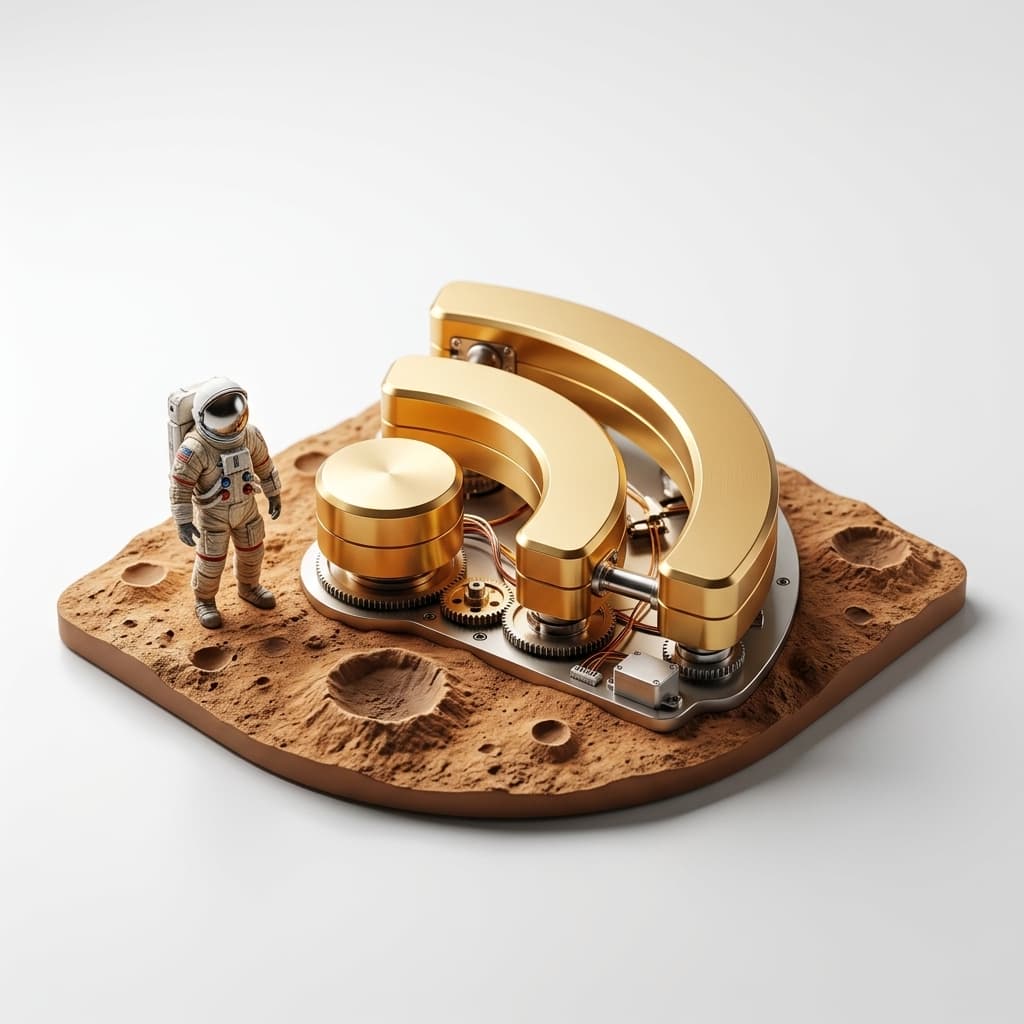
IP67 QDD Motors for Outdoor Humanoids: Thermal Constraints & Procurement Guide
A comprehensive engineering and procurement guide for sourcing IP67 waterproof Quasi-Direct Drive (QDD) actuators for outdoor humanoids and quadruped robots.
Last reviewed: July 24, 2026. Scope: Global OEM teams screening IP67 QDD Motors for outdoor humanoids and quadrupeds exposed to rain, mud splash, washdown, and temporary fresh-water immersion. Limits: This is an RFQ and architecture guide, not certification proof; verify duty cycle, connector sealing, insulation resistance, corrosion exposure, and third-party IP test reports with each supplier. For a project-specific review, contact the procurement engineering team.
For the last decade, bipedal humanoids and quadruped robots have largely been confined to climate-controlled R&D laboratories, clean factory floors, and carefully curated demonstration stages. In these pristine environments, standard Quasi-Direct Drive (QDD) actuators thrive. They rely on ambient air circulation and open, unsealed chassis designs to passively shed the massive amounts of heat generated during dynamic locomotion tasks.
However, as the robotics industry pivots aggressively toward commercial outdoor applications—ranging from agricultural surveying and disaster recovery to tactical military deployment and outdoor logistics—the environmental requirements have drastically changed. A humanoid robot working on a muddy construction site in the rain cannot use an open-frame motor. It requires a fully sealed, waterproof joint.
Transitioning a robotic joint from a basic dust-resistant rating (IP54) to a fully submersible rating (IP67) is not a simple matter of adding rubber gaskets. Sealing a low-ratio QDD motor introduces catastrophic thermal bottlenecks and mechanical friction penalties that fundamentally ruin the "transparent" backdrivability that makes legged locomotion possible in the first place.
For electrical engineers, mechanical designers, and global procurement teams, sourcing an IP67 QDD actuator is one of the most fraught hardware decisions in modern robotics. This guide unpacks the physical contradictions of waterproof actuators, compares the trade-offs, and provides a rigorous framework for evaluating suppliers.
1. The Core Definition: What Does IP67 Actually Mean for a Robotic Joint?
The Ingress Protection (IP) rating system, defined by IEC standard 60529, classifies the degrees of protection provided against the intrusion of solid objects, dust, accidental contact, and water in electrical enclosures.
In the context of a highly integrated robotic joint (which houses a frameless BLDC stator, a magnetic rotor, a planetary or cycloidal gearset, high-resolution dual encoders, and a custom FOC motor driver PCB), the IP67 rating signifies:
- First Digit (6): Dust-tight. No ingress of dust; complete protection against contact. A vacuum must be applied to the enclosure during testing.
- Second Digit (7): Immersion up to 1 meter. Ingress of water in harmful quantity shall not be possible when the enclosure is immersed in water under defined conditions of pressure and time (typically up to 1 meter of submersion for 30 minutes).
It is critical for procurement teams to understand that IP67 does not mean the robot can operate underwater continuously. That requires an IP68 rating, which involves deep-sea pressure compensation (often using oil-filled enclosures). IP67 simply ensures that if a quadruped slips into a deep puddle or a humanoid is caught in a torrential downpour, the internal electronics and copper windings will not short circuit or corrode.
2. The Engineering Contradiction: Waterproofing vs. Thermal Dissipation
The fundamental problem with waterproofing a QDD motor is that water and heat are enemies of the same enclosure.
A QDD motor relies on pushing extreme amounts of electrical current through copper windings to generate high peak torque. This results in significant $I^2R$ resistive heating (Joule heating). In a standard IP54 motor, the stator is often partially exposed to the air. As the robot moves, ambient air flows over the stator teeth and through the air gap between the rotor and stator, wicking heat away.
When you upgrade to an IP67 rating, you must hermetically seal the entire motor. The stator, the PCB, and the gearset are trapped inside an airtight aluminum drum.
The Thermal Trap
Because air is a terrible conductor of heat, sealing the motor creates an insulated oven. The heat generated in the copper windings cannot escape efficiently to the outer casing. If the motor is operated at high loads, the internal temperature rapidly spikes past 100°C.
- Magnet Demagnetization: NdFeB (Neodymium) magnets permanently lose their magnetic flux if they exceed their Curie temperature rating (often 120°C for standard grades, up to 150°C for UH grades).
- Insulation Breakdown: The enamel coating on the copper magnet wire will melt, causing a phase-to-phase short circuit that instantly destroys the motor driver.
- Encoder Failure: Optical and magnetic encoders are highly sensitive to heat; thermal expansion alters the air gap, causing position reading errors.
The Potting Solution
To solve this, premium actuator manufacturers must use thermally conductive epoxy potting. They pour a specialized resin into the stator cavity under a vacuum. This resin displaces all the air and physically bridges the gap between the hot copper windings and the outer aluminum heatsink shell. While this significantly improves thermal transfer, it adds substantial weight and increases the Bill of Materials (BOM) cost—a critical factor for procurement to monitor.
3. The Mechanical Penalty: Parasitic Friction and Backdrivability
The defining characteristic of a QDD joint—as opposed to a highly geared harmonic drive—is its backdrivability. When the power is off, you can easily spin the motor shaft by hand. This mechanical transparency allows the robot to absorb shock impacts (like jumping or falling) using software-defined virtual springs rather than shattering mechanical gears.
To achieve an IP67 rating, mechanical engineers must install dynamic rotary seals on the output shaft. The most common solution is a double-lip rotary shaft seal (often made of Nitrile rubber, NBR, or Viton).
These seals physically press against the rotating output shaft to prevent water ingress. This constant physical contact introduces severe parasitic friction (drag torque).
Impact on Control Systems
If a dynamic seal adds 0.5 Nm of drag torque to the joint, the motor must constantly fight its own waterproof casing just to move. More critically, the control algorithm (the Model Predictive Controller or Whole-Body Controller) loses its delicate sense of touch. The robot relies on sensing subtle changes in electrical current to detect if its foot has touched the ground. If the seal friction is high and non-linear (meaning it changes based on temperature and speed), the robot's footstep planning algorithms become erratic, causing the humanoid to stumble.
Premium IP67 joints bypass this by using customized PTFE (Teflon) labyrinth seals or magnetic liquid (ferrofluid) seals, which offer waterproofing with near-zero drag. However, these are highly exotic components that drastically extend supply chain lead times.
4. Structural Comparison: IP Ratings for Robotic Actuators
When issuing an RFQ, it is essential to align the environmental rating with the actual operational constraints. Over-specifying to IP68 when IP65 will suffice can double the unit cost.
| IP Rating | Environment Focus | Thermal Strategy | Backdrivability Penalty | Relative Cost Multiplier | Typical Robotics Application |
|---|---|---|---|---|---|
| IP54 | Indoor, clean floors | Passive air cooling | None (Zero drag) | 1.0x (Baseline) | R&D Humanoids, Factory Cobots |
| IP65 | Light rain, hose spray | Sealed case, external fins | Low (Single lip seal) | 1.3x | Last-mile delivery bots, Warehouse |
| IP67 | Heavy rain, temporary mud submersion | Thermal epoxy potting required | High (Double lip / heavy drag) | 1.8x - 2.5x | Outdoor Construction Humanoids, Agribots |
| IP68 | Continuous deep underwater | Oil-filled, pressure compensated | Very High (Fluid drag) | 4.0x+ | Subsea inspection ROVs |
| IP69K | High-pressure, high-temp steam jet | Fully welded stainless, potting | High | 5.0x+ | Food & Beverage processing robots |
5. System-Level Impacts of IP67 Actuators
Sourcing IP67 actuators does not occur in a vacuum; it forces cascading changes across the entire humanoid architecture.
- Cable Harnesses: A waterproof motor is useless if the connector isn't. IP67 systems require specialized, bulky automotive-grade connectors (e.g., TE Connectivity, Amphenol, or custom overmolded M12 connectors). These are stiff, heavy, and difficult to route through the complex kinematics of a humanoid hip joint.
- Increased Battery Drain: Because the motor is heavier (due to epoxy potting) and fighting seal friction, the continuous current draw of the robot increases. A humanoid that could walk for 4 hours on an IP54 architecture may only walk for 2.5 hours on an IP67 architecture using the same battery pack.
- High-Voltage Necessity: To counteract the thermal trap of a sealed enclosure, many engineers are forced to abandon 48V architectures and move to 96V or 120V bus voltages, which halves the current and drastically reduces the $I^2R$ heat generation inside the sealed motor.
For bus-voltage trade-offs behind this decision, see 48V vs 96V QDD Motors for Humanoid Robotics.
6. Procurement & Engineering Selection Checklist
When vetting suppliers for IP67 QDD actuators, do not accept a simple "Yes, it is waterproof" on a datasheet. Use this rigorous checklist to audit the supplier's engineering depth:
- Third-Party Certification: Can the supplier provide an actual test report from a certified laboratory proving the IP67 submersion test, or is it merely "designed to meet" IP67?
- Thermal Soak Data: Demand the continuous torque curve at 100% duty cycle for 60 minutes in an ambient air environment of 35°C. Many suppliers test their IP67 motors while they are submerged in cold water, artificially inflating their continuous torque ratings.
- Friction / Drag Torque Spec: What is the exact parasitic drag torque (in Nm) added by the rotary seals? Is it consistent across a temperature range of -10°C to 50°C?
- Potting Compound Verification: Does the supplier use vacuum potting for the stator? If not, trapped air bubbles will cause catastrophic localized hotspots and premature failure.
- Connector Lead Times: Are the high-voltage waterproof connectors off-the-shelf, or do they require custom overmolding? Custom overmolding can add 8-12 weeks to your supply chain lead time.
- Breathable Vents: Does the design incorporate a hydrophobic ePTFE membrane vent (like a Gore vent)? Sealed motors experience pressure changes as they heat up and cool down; without a breather valve, this pressure will eventually blow out the rotary seals.
For broader actuator RFQ context, pair this list with the QDD motor humanoid robot procurement guide.
6.1 Procurement Decision & Risk Matrix Table
To streamline the vendor selection process, use the following decision matrix to evaluate technical trade-offs versus procurement risks:
| Evaluation Dimension | Engineering Requirement | Procurement Action Item | Risk of Supplier Failure | Red Flag to Watch For | Acceptable Tolerance |
|---|---|---|---|---|---|
| IP Certification | IEC 60529 IP67 valid report | Request original lab PDF | Critical (Short circuit) | Self-certified "designed to meet" | Occasional IP65 if mounted high |
| Thermal Dissipation | Vacuum thermal potting | Audit BOM for potting epoxy | High (Stator burnout) | Air-gap designs claiming high torque | Max 110°C winding temp |
| Rotary Friction | < 0.3 Nm parasitic drag | Mandate drag torque spec | High (Control loop instability) | No drag torque curve provided | Up to 0.5 Nm for heavy bots |
| Connector Tooling | IP67 M12 / Automotive grade | Verify overmold lead times | Medium (Production delay) | Proprietary untested connectors | 4-week max lead time |
| Pressure Relief | ePTFE Breather membrane | Check mechanical BOM | Medium (Seal blowout) | Sealed completely without vents | N/A (Must have breather) |
| Corrosion Resistance | Anodized AL / Epoxy coat | Specify salt-spray test (hours) | Medium (Cosmetic / Structural) | Bare aluminum in marine use | 72-hour salt spray minimum |
6.2 Standardized Inquiry Template (RFQ Fields)
When reaching out to manufacturers, include these specific parameters in your RFQ to filter out unqualified vendors quickly:
- Target Application: (e.g., Bipedal knee joint, Quadruped hip joint)
- Continuous Torque Requirement: [X] Nm @ [Y] RPM (Specify 35°C ambient air, NOT water-cooled)
- Peak Torque: [X] Nm for max [Y] milliseconds
- Max Permissible Drag Torque: [X] Nm (Crucial for backdrivability)
- Bus Voltage: 48V / 96V / 120V
- Communication Protocol: EtherCAT / CAN-FD
- Waterproofing Method: Specify if vacuum potting is mandatory.
7. Frequently Asked Questions (FAQ)
Q: Can we just use a standard IP54 motor and design a waterproof shell around the robot's leg?
A: This is known as an exoskeleton sealing strategy. While it keeps the motors cheap, it creates a massive greenhouse effect inside the robot's leg. Without a dedicated heat exchanger, the ambient air inside the leg will rapidly heat up, causing all the motors to thermally throttle within minutes.
Q: Why do some manufacturers offer IP67 QDD motors that are actually smaller than their IP54 counterparts?
A: Beware of these claims. They often achieve a smaller form factor by drastically reducing the continuous torque rating, assuming the robot will only use peak torque for milliseconds. Always audit the continuous thermal rating.
Q: Does IP67 protect against salt water?
A: No. IP67 only guarantees protection against fresh water. If your humanoid is operating near the ocean or in winter environments where road salt is used, the aluminum casing will experience galvanic corrosion. You must specify specialized marine-grade anodizing or epoxy coatings.
Q: How does this affect safety compliance like UL 3300?
A: UL 3300 (Standard for SCIEE Robots) has stringent requirements for insulation resistance. If water breaches an IP-rated seal on a high-voltage (96V+) joint, it creates an immediate electrocution hazard. The design must incorporate fail-safes and ground fault detection.
8. Conclusion: Navigating the Trade-offs
Building a bipedal robot that can survive a rainstorm is a monumental engineering feat. Procurement teams must recognize that requesting an IP67 rating on a QDD actuator fundamentally changes the physics of the motor. It increases the BOM cost, adds significant weight, introduces thermal bottlenecks, and degrades the backdrivability that makes legged robotics elegant.
However, by carefully auditing thermal potting techniques, demanding advanced low-friction labyrinth seals, and verifying third-party lab testing, OEM teams can successfully bridge the gap between laboratory prototypes and robust, commercially viable outdoor humanoids.
Sourcing High-Performance Waterproof Actuators?
At QDD Motors, we understand the delicate balance between thermal survival and dynamic motion. Our customized sealed actuator lines utilize advanced thermal epoxies, low-drag dynamic seals, and integrated breather membranes to deliver true IP67 performance without sacrificing backdrivability.
Whether you need specialized modifications for agriculture quadrupeds or fully sealed 96V joints for outdoor humanoids, our engineering team provides end-to-end NPI support.
Explore our Frameless and QDD Customization Capabilities or Contact our Procurement Engineering Team to discuss your specific IP-rating requirements today.
Sources & References
- CubeMars official product catalog - Manufacturer context for integrated BLDC actuators and ESCs used in legged-robot joint sourcing.
- RobStride official actuator site - Manufacturer context for low-ratio robotic actuators and quadruped-platform joint procurement.
- Maxon Group official site - Supplier context for compact motor and drive modules used in demanding automation environments.
- IEC 60529: Degrees of protection provided by enclosures (IP Code) - Official standard page for IP67 and IP68 enclosure protection definitions.
- Wikipedia: IP Code - Detailed explanation of ingress protection codes and testing methodology.
Author

Categories
More Posts
Evaluating QDD Motors for Humanoid Robots: Procurement Criteria and Key Specs
Evaluate QDD Motors for humanoid robots with procurement specs, thermal checks, supplier vetting questions, and RFQ next steps for global OEM teams.
The Hidden Costs of Frameless Motor Integration: A TCO Model for Procurement
Use this frameless motor TCO model to compare kit price, housing, thermal design, QA, and lifecycle risk before issuing a robotics or OEM RFQ.
QDD Motor vs BLDC Motor: Which is Best for Robot Joints?
A deep dive into the differences between Quasi-Direct Drive (QDD) actuators and traditional Brushless DC (BLDC) motors for robotics applications.