

48V vs. 96V QDD Motors for Humanoid Robots: A System-Level Procurement Guide
Compare 48V vs 96V QDD Motors for humanoid robots with thermal, cable, safety, supply-chain, and RFQ checks for global OEM teams.
The rapid commercialization of humanoid robots has pushed actuator technology to its absolute physical limits. While mechanical engineers debate gear ratios and structural stiffness, electrical and procurement teams are grappling with a more fundamental system-level bottleneck: bus voltage.
For years, 48V has been the undisputed standard for legged robotics. Smaller quadrupeds and lightweight collaborative arms thrived on 48V architectures, leveraging a massive, highly commoditized supply chain of motor controllers, battery management systems (BMS), and Quasi-Direct Drive (QDD) actuators. However, as full-scale bipedal humanoids demand unprecedented peak torque for dynamic tasks like jumping, carrying heavy payloads, and recovering from stumbles, the 48V standard is hitting a severe thermal and physical wall.
A quiet but massive industry shift is underway toward 96V, 120V, and even higher voltage architectures for the core power distribution in humanoid robots. For OEM purchasing teams, distributors, and systems engineers, choosing between a mature 48V ecosystem and a nascent 96V architecture is a highly consequential decision. It dictates supply chain risk, robot weight, thermal continuous performance, and safety certification pathways.
This guide provides an exhaustive engineering and procurement framework for evaluating 48V versus 96V architectures, specifically through the lens of sourcing high-performance QDD motors for legged locomotion.
Reviewed: July 22, 2026. Scope: global OEM humanoid robot programs evaluating 48V, 96V, or 120V QDD actuator architectures for hips, knees, ankles, shoulders, and high-load torso joints. Limitations: use this as an architecture and supplier-screening guide; final voltage choice still requires duty-cycle logs, joint-level dynamometer testing, thermal soak tests, insulation review, and certification input from your safety lab.
For baseline actuator specification work before the voltage decision, pair this guide with the QDD motor humanoid robot procurement guide.
 Modern QDD actuators for humanoids must carefully balance winding resistance, thermal dissipation, and bus voltage. Transitioning to 96V allows for drastically thinner cables routed through the robot's structure.
1. The Engineering Physics: Why 48V is Hitting a Wall in Humanoids
To understand why leading humanoid companies are abandoning 48V, we must look at the fundamental physics of QDD motors. A QDD motor relies on a low gear ratio (typically 6:1 to 10:1) to maintain high backdrivability and mechanical transparency. Because the gear ratio is low, the motor itself must generate a massive amount of native torque to support the robot's weight.
In an electric motor, torque is directly proportional to electrical current. To get more torque at a fixed voltage, you must push more current (Amps) through the stator windings.
The Problem of Resistive Heating (I2R Losses)
When a 48V system demands 150 Nm of peak torque at the hip joint, the required phase current can easily spike to 100 Amps or more. According to Joule's first law, the heat generated by a conductor is proportional to the square of the current multiplied by the resistance, expressed as P = I2R.
Because the heat scales with the square of the current, doubling the current quadruples the heat generated. In a 48V humanoid, these extreme current spikes cause rapid thermal saturation in the motor's stator. Once the motor hits its thermal limit (often around 85°C to 100°C depending on the magnet grade and winding insulation), the robot must thermally throttle. This results in the robot physically sitting down, pausing, or failing to maintain its payload capacity until the joints cool off.
The Cable Weight Penalty
Beyond the motor itself, moving 100+ Amps of current requires extremely thick copper cabling. A humanoid robot routes power from a central battery pack (usually in the torso) down through the hips, knees, and ankles. Thick 48V cables introduce two critical problems:
- Massive Weight Addition: Copper is heavy. Thick power cables running down the length of the robot's legs significantly increase the overall weight, which ironically requires more torque to move, creating a vicious cycle.
- Mechanical Stiffness: Thick cables are physically stiff. Routing them through a highly articulating multi-axis hip joint introduces parasitic mechanical resistance, forcing the QDD motors to work harder just to bend the robot's own wiring harness.
2. The Case for 96V (and Higher) Architectures
By doubling the bus voltage from 48V to 96V, a robot can achieve the exact same mechanical power output using half the current.
Thermal and Efficiency Gains
Halving the current has a profound effect on thermal management. Because I2R losses scale with the square of the current, cutting the current in half reduces the resistive heating in the wiring and distribution boards by roughly 75%. For the QDD motor itself, the stator windings can be redesigned (using thinner wire with more turns) to achieve the desired motor constant (Kv) at the higher voltage. The result is a motor that can sustain its continuous torque rating for much longer durations without triggering thermal cutoffs. This is the difference between a robot that can walk for 10 minutes versus a robot that can work a full 4-hour shift in a warehouse.
Cable Miniaturization
At 96V, the 100-Amp peak requirement drops to 50 Amps. This allows engineers to use significantly thinner, lighter, and more flexible wiring harnesses. The reduced mass in the extremities (the lower legs and arms) drastically lowers the reflected inertia of the limbs. A lighter leg requires less torque to swing forward, improving the robot's dynamic agility, battery life, and payload capacity.
3. System-Level Procurement Trade-offs: 48V vs. 96V
While 96V offers undeniable physics advantages, it introduces severe supply chain and compliance challenges. Procurement teams must weigh these factors carefully before committing to an architecture.
| Specification / Category | 48V Architecture Ecosystem | 96V+ Architecture Ecosystem | Impact on Procurement & Engineering |
|---|---|---|---|
| Component Availability | Highly commoditized. Massive variety of COTS drivers, BMS, and DC-DC converters. | Fragmented. Very few off-the-shelf integrated FOC drivers exist; custom electronics often required. | 96V increases NPI (New Product Introduction) lead times and R&D costs significantly. |
| Safety & Compliance | Falls under SELV (Safe Extra-Low Voltage) limits below 60V DC. Minimal shock hazard. | Exceeds SELV limits. Considered hazardous voltage. Requires strict galvanic isolation and interlocks. | 96V requires complex UL/CE certification pathways, specialized high-voltage connectors, and enhanced factory safety protocols. |
| Cable Harness Cost & Weight | Heavy, thick copper wiring. Cheaper per meter, but adds parasitic mass to the robot. | Thin, lightweight, highly flexible wiring. Reduces robot weight and joint resistance. | 96V allows for more elegant mechanical routing but requires sourcing specialized high-flex connectors. |
| Thermal Continuous Torque | Lower continuous operational time due to rapid I2R heating during high-load tasks. | Superior thermal endurance. Robot can maintain holding poses or heavy payloads longer. | 96V is virtually mandatory for commercial humanoids expected to do real industrial labor without thermal throttling. |
| Integrated Driver Size | Easily miniaturized to fit directly on the back of the QDD actuator casing. | Larger footprint due to necessary creepage, clearance, and larger high-voltage MOSFETs/GaN FETs. | 96V integrated drivers may protrude further from the motor, complicating tight joint packaging. |
| Supplier Risk | Low. Multiple vendors can easily act as second sources for identical 48V specs. | High. You are often locked into a single advanced supplier capable of delivering 96V integrated QDDs. | Requires stringent supplier auditing and long-term volume agreements to secure a 96V supply chain. |
| Cost per Joint | Lower unit economics due to economies of scale from the e-bike/drone/quadruped markets. | Higher unit economics due to custom stators, specialized high-voltage silicon, and lower production volumes. | 96V systems carry a premium, justifiable only if the performance gains unlock enterprise use cases. |
4. Supply Chain Realities: Sourcing 96V Components
The most significant barrier to 96V adoption is not the motor itself, but the silicon required to drive it.
Motor Controllers (Inverters): The 48V market is flooded with cheap, reliable 100V-rated MOSFETs that provide plenty of overhead for back-EMF spikes. To drive a 96V motor safely, the silicon must be rated for at least 150V to 200V to handle inductive kickback during rapid deceleration. Silicon Carbide (SiC) and Gallium Nitride (GaN) components are often required to maintain high switching frequencies efficiently at these voltages. These components are more expensive and subject to volatile lead times in the global semiconductor market.
Furthermore, most QDD motors rely on integrated drivers—where the PCB is bolted directly to the back of the motor to minimize EMI and cable length. Designing an integrated driver for 96V is extremely difficult due to the required "creepage and clearance" distances on the PCB to prevent arcing, which inherently increases the physical size of the driver board.
Connectors and Wiring: Procurement teams will find that sourcing high-flexibility, high-cycle-life robotic cables rated for 48V is trivial. Finding highly flexible cables rated for >100V DC with the necessary shielding and compact automotive-grade waterproof connectors (e.g., IP67/IP68) is a specialty market. Teams often have to work directly with custom harness manufacturers, driving up the BOM cost.
5. QDD Motor Winding Modifications for High Voltage
If you decide to migrate to 96V, you cannot simply plug a 48V QDD motor into a 96V driver. The motor's stator windings must be specifically engineered for the new voltage.
Motor suppliers achieve this by modifying the Kv rating (RPM per Volt). To maintain the same top speed at double the voltage, the motor needs half the Kv. The factory accomplishes this by winding the stator with thinner copper wire, but using significantly more "turns" per tooth.
When vetting suppliers for a 96V transition, ask about their copper fill factor. Thinner wire is notoriously harder to wind neatly into the stator slots. If the supplier uses sloppy manual winding, the copper fill factor drops, introducing air gaps. Air is a terrible conductor of heat, meaning the heat generated in the copper won't transfer efficiently to the aluminum stator casing, completely negating the thermal benefits of the 96V system. Premium suppliers use automated needle winding or hairpin winding techniques to maximize the fill factor, ensuring tight, thermally efficient copper density regardless of the wire gauge.
6. Procurement & Sourcing Checklist for High-Voltage QDD Motors
When issuing an RFQ (Request for Quotation) for 96V or 120V QDD motors, use this checklist to separate mature industrial suppliers from hobby-grade vendors.
- Winding Customization Lead Time: Does the supplier charge exorbitant NRE (Non-Recurring Engineering) fees to change the stator windings from their standard 48V to your required 96V spec? A competent OEM supplier should be able to simulate and prototype a winding change in weeks, not months.
- Integrated High-Voltage Driver: Does the supplier offer an integrated 96V FOC driver, or do they only supply the bare motor? If they provide the driver, what is the voltage rating of the onboard MOSFETs (must be >= 150V)?
- Thermal Derating Curves at 96V: Request the continuous torque curves over a 60-minute duration at your specific bus voltage. Do not accept peak torque data as a substitute for thermal continuous performance.
- Dielectric Strength Testing: For voltages exceeding SELV (60V DC), the motor insulation must be flawless to prevent shorts to the chassis. Does the supplier perform 100% Hi-Pot (High Potential) end-of-line testing on every motor shipped?
- Isolation Architecture: For integrated drivers, is the communication bus (e.g., EtherCAT or CAN-FD) galvanically isolated from the high-voltage power stage to protect the robot's central computer from ground loops and spikes?
- Copper Fill Factor Quality: Can the supplier provide cross-sectional microscopy or clear data on their slot fill factor for high-turn, thin-wire stators?
- IP Rating for Connectors: If the robot is intended for outdoor use, are the high-voltage power and data connectors genuinely IP67 rated, and do they feature mechanical interlocks (HVIL)?
7. Frequently Asked Questions (FAQ)
Q: Can a 48V humanoid robot perform backflips and highly dynamic maneuvers?
A: Yes, in short bursts. Many famous viral videos of robots performing acrobatics utilize 48V systems. However, these are often "sprint" demonstrations. The motors pull immense current to perform the jump and then require significant cool-down time. If that same robot needs to carry a 20kg box up a flight of stairs repeatedly for hours, the 48V system will thermally saturate.
Q: Why don't we just liquid-cool the 48V QDD motors?
A: Liquid cooling adds pumps, radiators, coolant mass, and the constant risk of leaks to a highly dynamic, vibrating machine. While common in electric vehicles, routing liquid cooling lines through a 6-axis robotic leg is mechanically nightmarish and introduces severe points of failure. High voltage air-cooled systems are infinitely more reliable for humanoids.
Q: What is the SELV limit, and why do engineers care so much about it?
A: SELV stands for Safe Extra-Low Voltage, generally defined as below 60V DC. Systems operating below this limit are considered safe from causing lethal electric shocks under normal conditions. Once you move to 96V or 120V, the robot is classified differently under safety standards (like UL 3300 or ISO 13482). It requires specialized high-voltage safety interlocks, rigorous chassis grounding, and shielded cables, all of which increase development complexity and certification costs.
Q: Will the industry standardize on a specific high voltage?
A: It is currently heavily fragmented. Some companies are pushing for 96V, others for 120V, and some even exploring 400V architectures mirroring the EV industry. However, 96V to 120V seems to be the sweet spot for balancing cable weight reduction with battery pack safety and component sourcing for humanoids.
8. Making the Strategic Decision for Your Robot
For research labs, university teams, and lightweight collaborative robot (cobot) developers, the 48V ecosystem remains the logical choice. The components are cheap, readily available, and safe to handle without specialized protocols.
However, if your procurement team is sourcing components for a commercial, heavy-duty humanoid designed for logistics, manufacturing, or hazardous environments, a 48V architecture is a dead end for continuous operation. Transitioning to a 96V+ architecture is a painful but necessary leap. It forces you to build a more mature, robust supply chain and work closely with advanced motor manufacturers capable of delivering high-voltage integrated QDD solutions.
Ready to secure your high-voltage actuator supply chain?
Whether you are scaling a 48V quadruped or engineering a 96V industrial humanoid, our team can provide the exact winding specifications, thermal validation, and volume manufacturing support you need.
Explore our range of customizable QDD Actuators and Direct Drive Hubs designed for legged locomotion. For specific voltage modifications and NPI scaling, contact our engineering procurement team today.
Sources & References
- 15 Technical Challenges to Consider and Conquer When Designing 48V PDN - Vicor power-delivery network design context
- Motor Drivers - Allegro MicroSystems motor-driver and power-stage component context
- Motion Control - Tech Briefs motion-control and automation engineering coverage
- Design and Characterization of 3D Printed, Open-Source Actuators for Legged Locomotion - QDD actuator characterization and thermal-limit reference
Author

Categories
More Posts
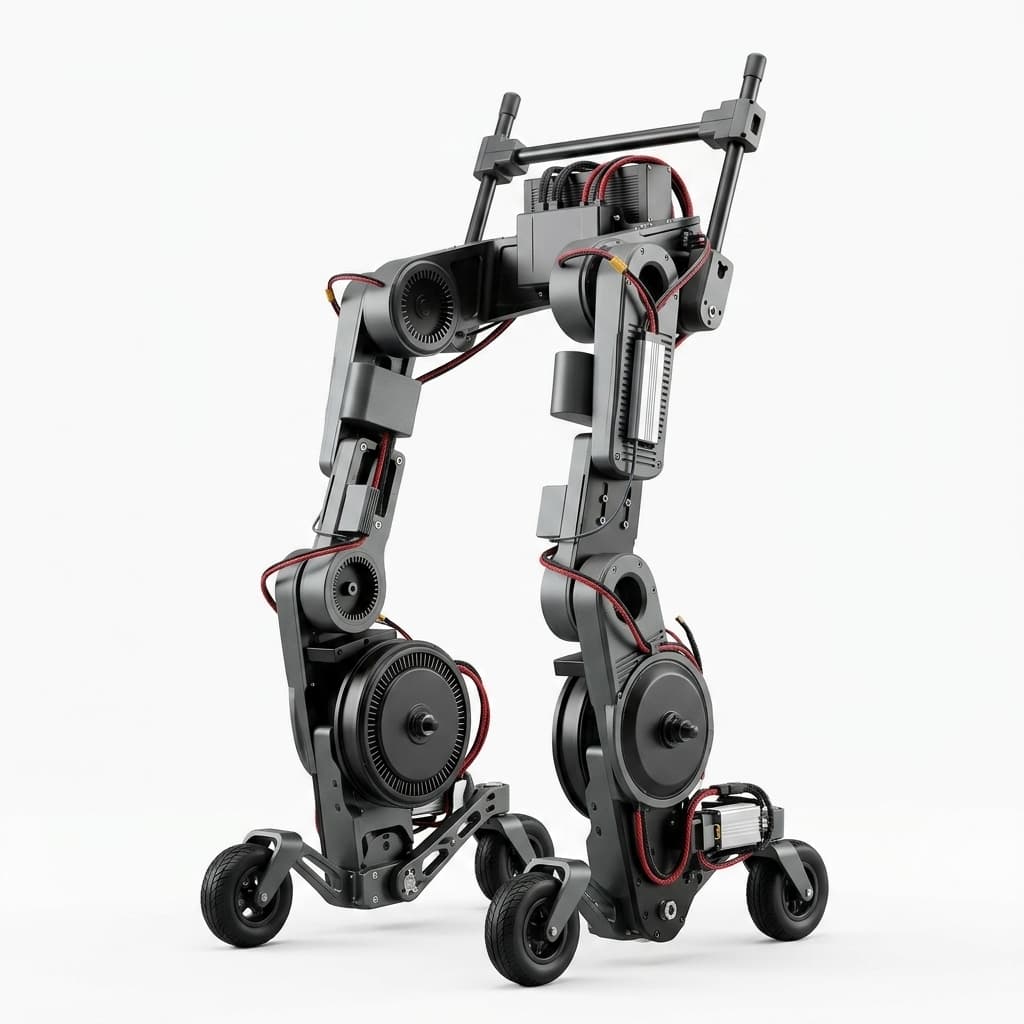
How Exoskeleton Motors Are Revolutionizing Wearable Robotics
Explore the critical engineering requirements for exoskeleton actuators, including weight, profile, backdrivability, and thermal management.
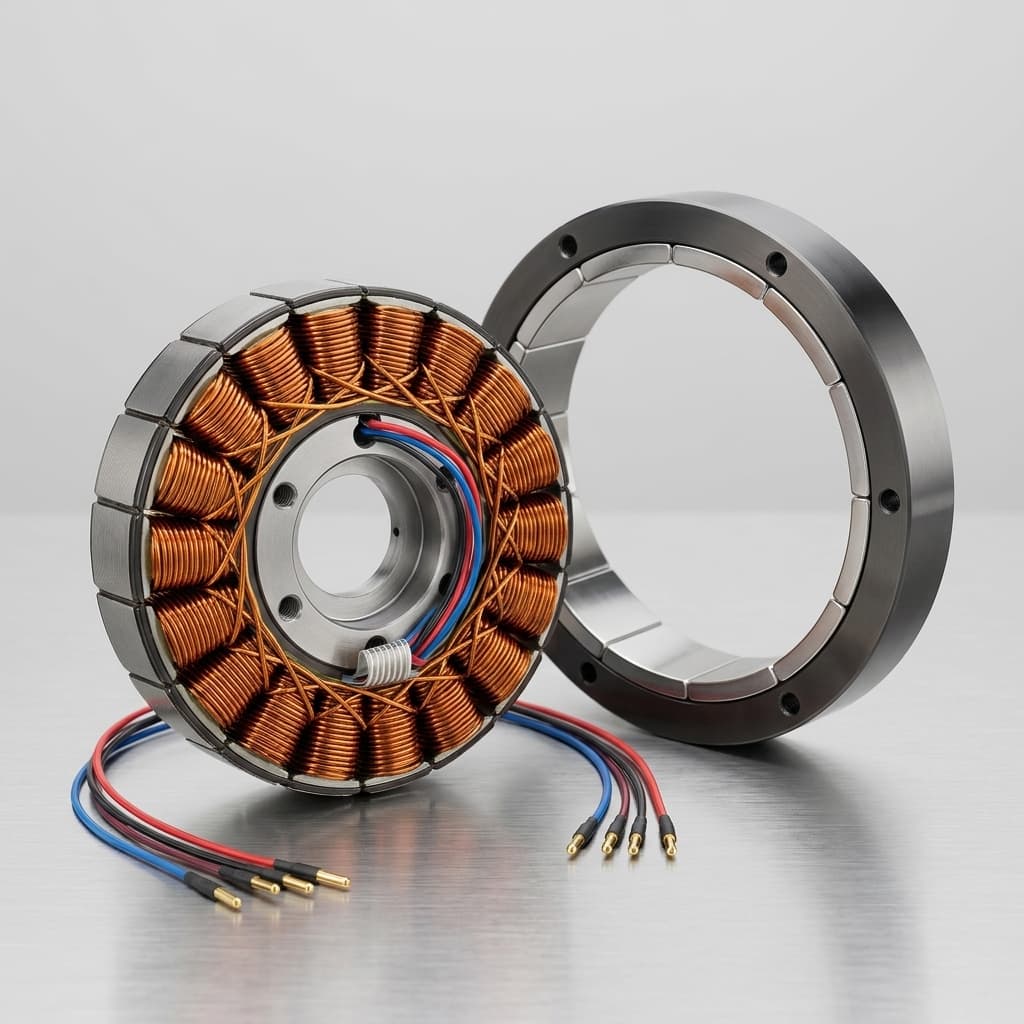
The Hidden Costs of Frameless Motor Integration: A TCO Model for Procurement
Use this frameless motor TCO model to compare kit price, housing, thermal design, QA, and lifecycle risk before issuing a robotics or OEM RFQ.
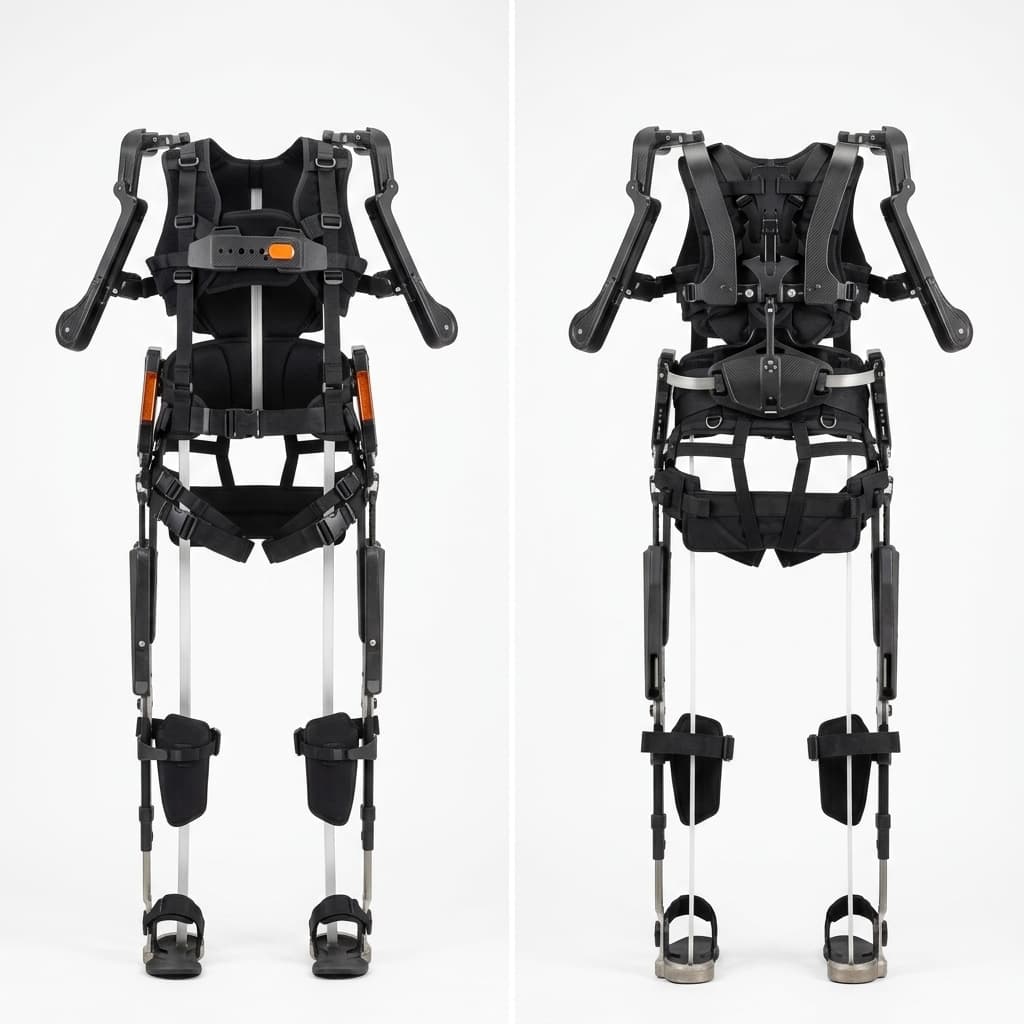
QDD Motor vs BLDC Motor: Which is Best for Robot Joints?
A deep dive into the differences between Quasi-Direct Drive (QDD) actuators and traditional Brushless DC (BLDC) motors for robotics applications.