
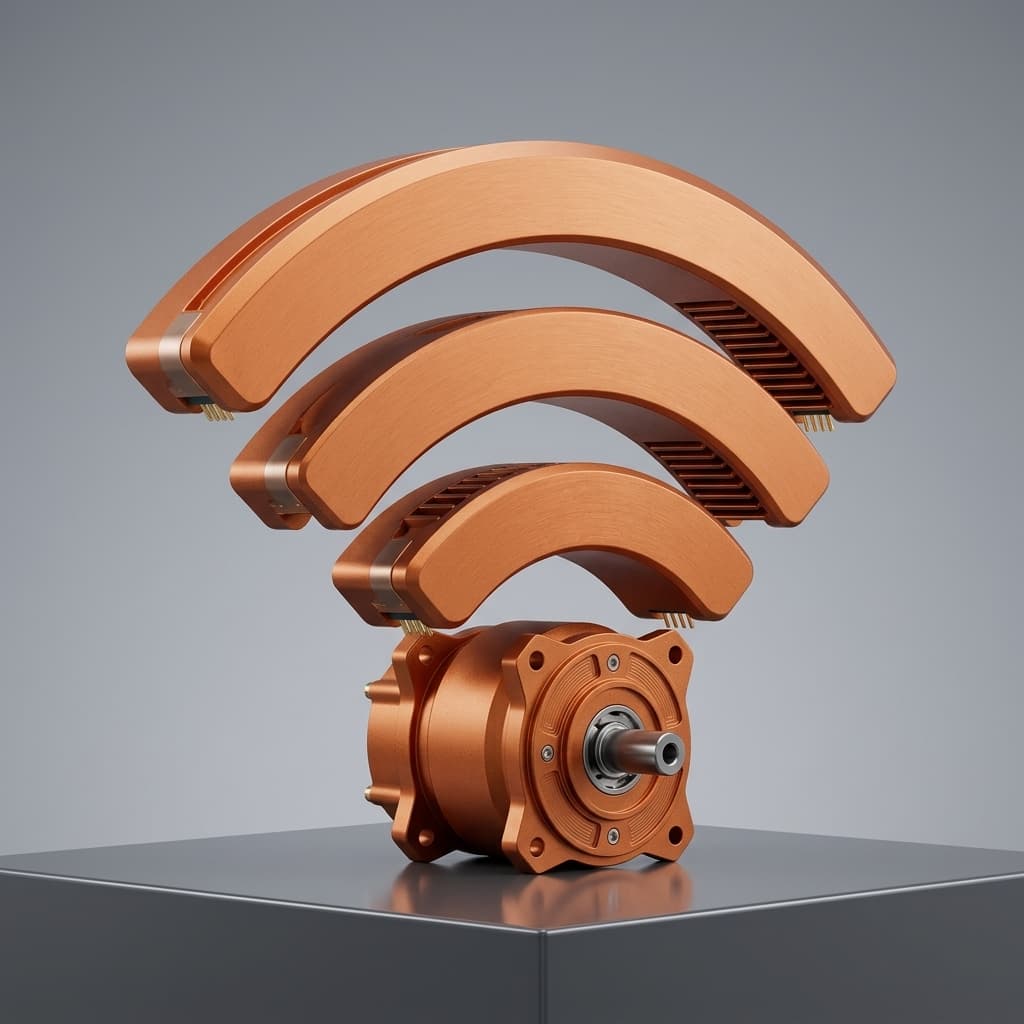
ISO/TS 15066 Compliance for QDD Motors: Navigating Collaborative Robot Safety Standards in Procurement
ISO/TS 15066 compliance guide for QDD motors in cobots and humanoids: vet PFL specs, supplier data, actuator limits, and OEM procurement risks for OEMs.
The transition from caged industrial automation to collaborative robotics has fundamentally altered how hardware is procured and engineered. As collaborative robots (cobots), exoskeletons, and humanoid robots leave the factory floor to interact directly with human workers and consumers, safety compliance has become the dominant bottleneck in product development. At the center of this safety paradigm is ISO/TS 15066, the defining technical specification for collaborative robot safety.
For engineering and procurement teams, sourcing actuators that inherently support ISO/TS 15066 compliance is a high-leverage strategic decision. The traditional approach—using high-ratio, ultra-stiff gearboxes combined with expensive external force-torque sensors—is increasingly being replaced by Quasi-Direct Drive (QDD) motors. QDD actuators combine high-torque-density frameless motors with low-ratio transmissions, offering mechanical transparency and backdrivability that natively align with collaborative safety requirements.
This guide provides a rigorous framework for evaluating QDD motors for ISO/TS 15066 compliance. It is designed for procurement teams, systems engineers, and supply chain managers who must vet component suppliers, validate technical specifications, and ensure their robotic platforms can achieve global safety certifications without suffering from cost overruns or delayed time-to-market.
Reviewed: July 26, 2026. Scope: Global OEM robotics programs, collaborative arms, and humanoid applications. Limitations: Component-level compliance is only a prerequisite; final ISO 15066 certification requires system-level risk assessment and validation.
For broader program planning, pair these compliance criteria with our OEM motor manufacturing support and custom motor engineering programs.
1. Understanding ISO/TS 15066 in the Context of Actuators
Published as a technical specification bridging ISO 10218-1 and ISO 10218-2, ISO/TS 15066 provides specific, data-driven guidelines for the safe operation of collaborative robots. While the standard covers several collaborative operations (like Hand Guiding and Speed/Separation Monitoring), the most critical and challenging requirement for motor procurement is Power and Force Limiting (PFL).
Power and Force Limiting (PFL)
In a PFL collaborative system, incidental contact between the robot and a human operator is anticipated and permitted. To prevent injury, the robot must be designed to keep impact forces and pressures below specific biomechanical thresholds. ISO/TS 15066 maps out these thresholds across various human body regions, categorizing contacts into two types:
- Transient Contact: Dynamic impacts where the human body part is not clamped and can recoil (e.g., a robot arm bumping a worker's shoulder).
- Quasi-Static Contact: Crushing or clamping scenarios where a body part is trapped between the robot and a fixed surface.
For a robot to adhere to PFL limits, it must detect contact instantaneously and react (stop or reverse) before the force exceeds the threshold. This requirement places massive demands on the robot's joints. If an actuator has high friction, high inertia, or significant communication latency, the robot will exceed the safety threshold before the software can intervene.
This is where the mechanical architecture of the actuator dictates the ceiling of the robot's safety capabilities, making the initial procurement decision critical.
2. The QDD Advantage for Collaborative Safety
Historically, robotic arms utilized brushless DC (BLDC) motors paired with harmonic drives or cycloidal gearboxes at ratios of 50:1, 100:1, or even 160:1. While excellent for payload capacity and precision repeatability, these high-ratio systems are exceptionally stiff and non-backdrivable. To make them safe under ISO/TS 15066, engineers are forced to add multi-axis force-torque (F/T) sensors to every joint, significantly inflating the Bill of Materials (BOM) cost and adding points of failure.
Quasi-Direct Drive (QDD) architecture solves this at the physical layer. By utilizing a highly optimized, large-diameter frameless motor coupled with a low-ratio planetary gearset (typically between 6:1 and 10:1), QDD motors offer three fundamental advantages for PFL compliance:
A. Mechanical Transparency and Backdrivability
Because the gear ratio is low, external forces applied to the output shaft can easily rotate the motor rotor backward. This "backdrivability" means the joint acts as a mechanical shock absorber. During a transient contact event, the low friction allows the joint to yield physically to the impact, significantly reducing the peak impact force transferred to the human, even before the software controller has registered the collision.
B. Sensorless Force Estimation
In highly geared systems, internal gearbox friction masks the external torque applied to the joint. In a QDD motor, the friction is so low that the electrical current consumed by the motor is highly proportional to the output torque. By monitoring the current via Field-Oriented Control (FOC), the robot can accurately estimate external contact forces. This enables "sensorless" collision detection, allowing the robot to halt or reverse upon contact without relying on fragile, expensive external F/T sensors.
C. Low Reflected Inertia
Reflected inertia scales with the square of the gear ratio. A 100:1 gearbox increases the motor rotor's perceived inertia by a factor of 10,000. A 10:1 QDD system increases it by only a factor of 100. Lower inertia means the joint can decelerate and stop much faster when a collision is detected, minimizing the kinetic energy transferred during an impact and directly supporting ISO/TS 15066 limits.
3. Essential Actuator Specifications for ISO 15066
When evaluating QDD motors and their integrated drives from a procurement standpoint, standard metrics like nominal torque and voltage are insufficient. To guarantee that the actuators can support collaborative safety protocols, engineering and purchasing teams must audit the following critical specifications:
| Critical Specification | Target Value for Compliance | Impact on ISO/TS 15066 Compliance |
|---|---|---|
| Reflected Inertia ($J_r$) | As low as physically possible for the required torque. | High inertia prevents rapid deceleration. If inertia is too high, the kinetic energy transferred during transient contact will violate biomechanical limits before the brakes engage. |
| Static Friction (Stiction) | < 3% of Nominal Output Torque | High stiction ruins mechanical backdrivability. The robot acts rigidly upon impact, causing severe transient force spikes instead of yielding compliantly to the human. |
| Torque Ripple / Cogging | < 2% Peak-to-Peak | Smooth rotation is vital. High torque ripple distorts current-based force estimation, causing false-positive collision detections or masking real human contact entirely. |
| Control Loop Latency | Current loop ≥ 20kHz, EtherCAT cycle ≤ 1ms | Delayed communication means delayed braking. Microseconds matter when arresting a swinging robotic arm before it crushes a finger in a quasi-static scenario. |
| Encoder Resolution | Dual Absolute Encoders > 17-bit | Dual encoders (measuring both rotor side and output shaft) allow the controller to calculate exact joint twist, forming the basis for virtual impedance control and soft safety boundaries. |
| Braking Mechanism | Zero-backlash failsafe holding brake | In the event of an E-stop or power loss, the joint must lock instantly without dropping the payload, preventing secondary crushing hazards. |
4. Supplier Vetting and Procurement Checklist
Migrating to QDD motors requires strict supplier validation. Because QDD architecture relies on tight integration between the stator, rotor, planetary gears, and dual encoders, component-level inconsistencies directly compromise system-level safety. Use this checklist during the Request for Quotation (RFQ) and sampling phases.
- Friction Characterization Data: Does the supplier provide empirical stiction and dynamic friction curves across the operating temperature range?
- Cogging Torque Reports: Request the raw cogging torque maps. Confirm that the supplier uses skewed laminations or advanced magnetic optimization to suppress ripple below 2%.
- Dual-Encoder Latency Validation: Are the encoders integrated natively with the driver? Verify that the positional data is not delayed by slow internal serial buses before it reaches the master safety controller.
- Thermal Derating Transparency: Collaborative robots often hold static positions (e.g., holding a heavy tool in mid-air). QDD motors generate high heat at zero speed. Does the supplier provide continuous stall torque ratings at 40°C ambient?
- Traceability and Quality Control: Does the supplier possess ISO 9001 certification? Can they provide serialization and batch tracking for the rare earth magnets and planetary gear sets to ensure uniform backdrivability across production runs?
- Customization Support: Are they willing to modify winding configurations ($K_v$ and $K_m$ parameters) to match your specific bus voltage and speed requirements to optimize the FOC control loop?
5. Application Boundaries and Limitations
While QDD motors are the optimal choice for ensuring ISO/TS 15066 compliance in dynamic, interactive robots, they are not a universal panacea. Understanding their application boundaries prevents costly over-engineering.
Where QDD Excels (Collaborative Focus):
- Humanoid Robot Legs and Arms: The high backdrivability allows for compliant walking gaits, impact absorption during foot strikes, and safe interaction when working alongside humans.
- Assistive Exoskeletons: Wearable robotics require absolute transparency. If a motor fights the user's natural movement, it causes fatigue. QDD's low friction allows humans to backdrive the joints effortlessly when unpowered.
- Cobot Arms for Assembly: Perfect for pick-and-place tasks where human workers frequently enter the robot's workspace, relying on PFL rather than laser scanners to ensure safety.
Where QDD is Sub-optimal:
- Heavy Payload Industrial Manipulation: If a robot needs to lift 500kg car chassis, the sheer size of a QDD motor required would be impractical. Traditional high-ratio drives remain necessary here.
- Micrometer Precision Machining: QDD systems, due to their low gear ratio and inherent compliance, lack the ultra-stiff structural rigidity required for CNC milling or high-tolerance laser welding. In these scenarios, compliance is actually detrimental to accuracy.
6. Total Cost of Ownership (TCO) Implications
At first glance, a premium QDD actuator with dual absolute encoders and a customized planetary gearset may appear more expensive on a line-item BOM comparison against a generic BLDC motor. However, procurement teams must analyze the Total Cost of Ownership (TCO) through the lens of safety compliance.
If an engineering team selects a cheaper, high-ratio, non-backdrivable actuator, they are mathematically forced to implement complex workarounds to pass ISO/TS 15066. This typically involves purchasing and integrating multi-axis force-torque sensors at thousands of dollars per joint, adding capacitive safety skin to the robot's exterior, and spending hundreds of engineering hours writing complex observer algorithms to mitigate gearbox stiction.
By sourcing a highly backdrivable QDD motor, the compliance is built into the physical mechanics of the joint. You eliminate the external sensors, reduce the computational load on the safety controller, simplify assembly, and drastically accelerate the certification timeline. In nearly all collaborative applications, investing in a superior actuator yields a lower system-level BOM and faster time-to-market.
7. Frequently Asked Questions (FAQ)
How does QDD replace the need for joint torque sensors?
Because QDD gear ratios are low (typically <10:1), internal friction is minimal. Therefore, any external force applied to the robot arm translates directly into a measurable spike in the motor's electrical current. By monitoring this current with a high-speed Field-Oriented Control (FOC) drive, the robot accurately calculates the external force without needing a physical strain gauge.
Can QDD motors meet the quasi-static clamping limits of ISO 15066?
Yes. The low reflected inertia of QDD motors allows them to decelerate incredibly fast. When the control system detects a sudden spike in current (indicating a collision), the motor can reverse direction in milliseconds, often before the clamping force exceeds the pain thresholds defined in the specification.
Does backdrivability mean the robot will drop its payload if power is lost?
No. QDD actuators designed for collaborative applications are equipped with integrated failsafe holding brakes. If power is cut or an Emergency Stop is triggered, the brake engages mechanically, locking the joint to prevent the robot from collapsing or dropping hazardous materials.
Are there thermal issues with using QDD motors for collaborative tasks?
Thermal management is the primary challenge of QDD architecture. Because the gear ratio is low, the motor must supply more continuous torque to hold payloads against gravity, generating $I^2R$ resistive heat. Procurement must verify that the motor's continuous thermal limits align with the robot's intended duty cycle.
Do I still need system-level ISO 15066 certification if I buy compliant motors?
Absolutely. Buying QDD motors provides the physical capability to meet PFL limits, but the robot must still undergo a comprehensive system-level risk assessment. Factors like end-effector design, payload hazards (e.g., sharp objects), and software safety logic all contribute to the final certification.
8. Conclusion and Next Steps
Achieving ISO/TS 15066 compliance is no longer an afterthought—it is the prerequisite for deploying robots in human-centric environments. The mechanical characteristics of Quasi-Direct Drive (QDD) actuators provide a foundational advantage, translating low inertia and high backdrivability into native Power and Force Limiting (PFL) capabilities.
For procurement and engineering teams, the priority is identifying suppliers who can deliver integrated QDD packages with transparent thermal data, low stiction, and robust dual-encoder architectures.
To explore customized QDD solutions tailored for your collaborative robotics program, consult our OEM motor manufacturing support team or review our custom motor engineering services to discuss your specific payload and compliance requirements.
Sources & References
- ISO 15066:2016 Technical Specification: Robots and robotic devices — Collaborative robots. International Organization for Standardization (ISO). Provides the foundational Power and Force Limiting (PFL) thresholds. https://www.iso.org/standard/62996.html
- Association for Advancing Automation (A3): Understanding ISO/TS 15066 Safety Standards. A comprehensive breakdown of transient and quasi-static contact scenarios for cobot integration. https://www.automate.org/industry-insights/iso-ts-15066-safety-standard-for-collaborative-robots
- Occupational Safety and Health Administration (OSHA): Robotics. Background on industrial robot hazards, safeguarding, and risk-control expectations that still require system-level assessment beyond component selection. https://www.osha.gov/robotics
Author

Categories
More Posts
48V vs. 96V QDD Motors for Humanoid Robots: A System-Level Procurement Guide
Compare 48V vs 96V QDD Motors for humanoid robots with thermal, cable, safety, supply-chain, and RFQ checks for global OEM teams.
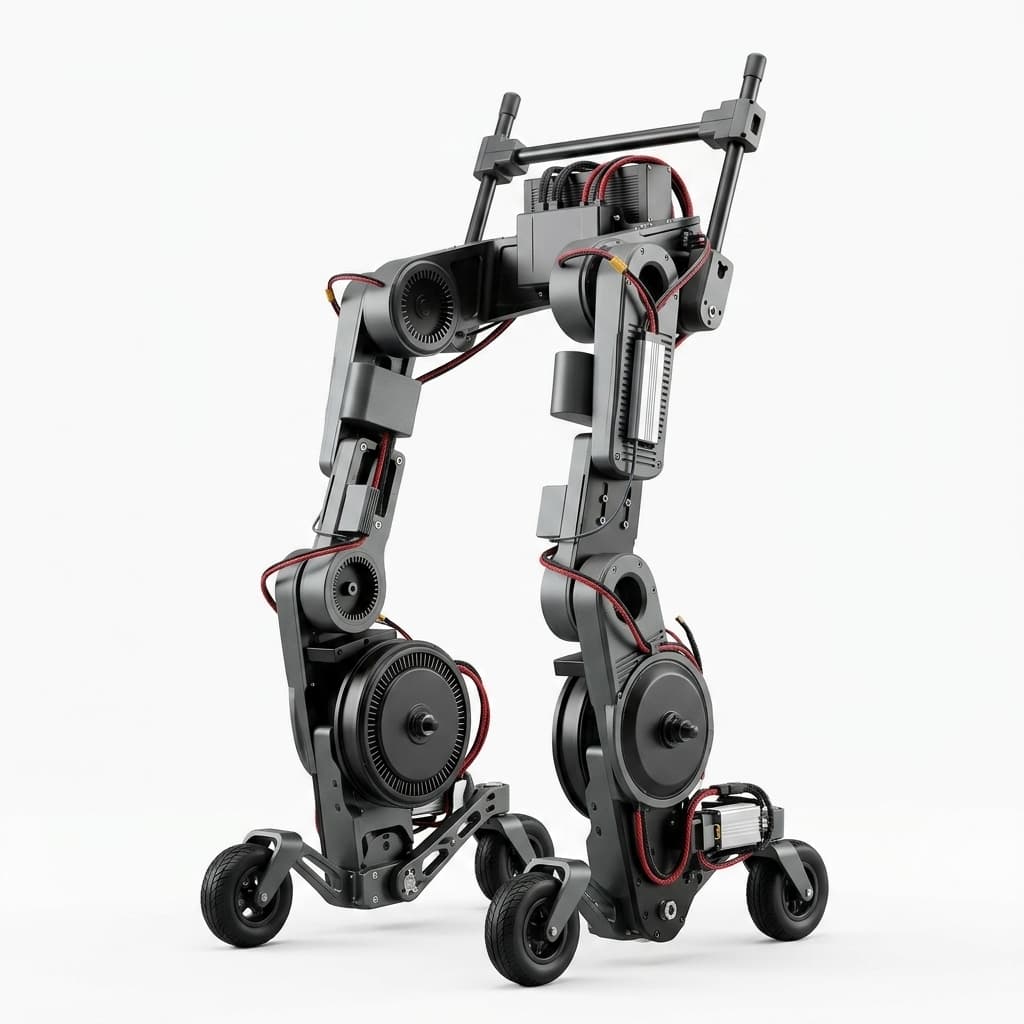
How Exoskeleton Motors Are Revolutionizing Wearable Robotics
Explore the critical engineering requirements for exoskeleton actuators, including weight, profile, backdrivability, and thermal management.
Evaluating QDD Motors for Humanoid Robots: Procurement Criteria and Key Specs
Evaluate QDD Motors for humanoid robots with procurement specs, thermal checks, supplier vetting questions, and RFQ next steps for global OEM teams.