
Evaluating QDD Motors for Humanoid Robots: Procurement Criteria and Key Specs
Evaluate QDD Motors for humanoid robots with procurement specs, thermal checks, supplier vetting questions, and RFQ next steps for global OEM teams.
The rapid commercialization of humanoid robots has triggered a massive demand for high-performance joint actuators. At the heart of this hardware revolution is the Quasi-Direct Drive (QDD) motor. Combining high-torque-density brushless motors with low-ratio gearboxes, QDD actuators provide the mechanical transparency and dynamic agility required for bipedal locomotion.
For engineering and procurement teams, sourcing the right QDD motor goes far beyond reading nominal torque values. Failing to vet hidden specifications or supplier manufacturing maturity can lead to severe thermal throttling, poor backdrivability, and disrupted supply chains. When building a commercial humanoid robot intended for scalable production, actuators often become one of the dominant Bill of Materials (BOM), validation, and supplier-risk line items. Thus, getting the procurement specifications right the first time is a high-leverage engineering decision.
This guide provides a rigorous framework for evaluating QDD motors tailored for humanoid robot joints, complete with integration boundaries, detailed technical deep dives, total cost of ownership considerations, and an extensive sourcing checklist.
Reviewed: July 19, 2026. Scope: global OEM humanoid robot programs evaluating QDD Motors for hips, knees, ankles, and higher-load torso joints. Limitations: use this as an RFQ and engineering-screening guide; final motor choice still requires joint-level thermal testing, gait-specific duty-cycle validation, and supplier sample inspection.
For broader program planning, pair these selection criteria with the OEM motor manufacturing support and custom motor engineering workflows so mechanical, electrical, purchasing, and quality teams agree on acceptance gates before sample orders.
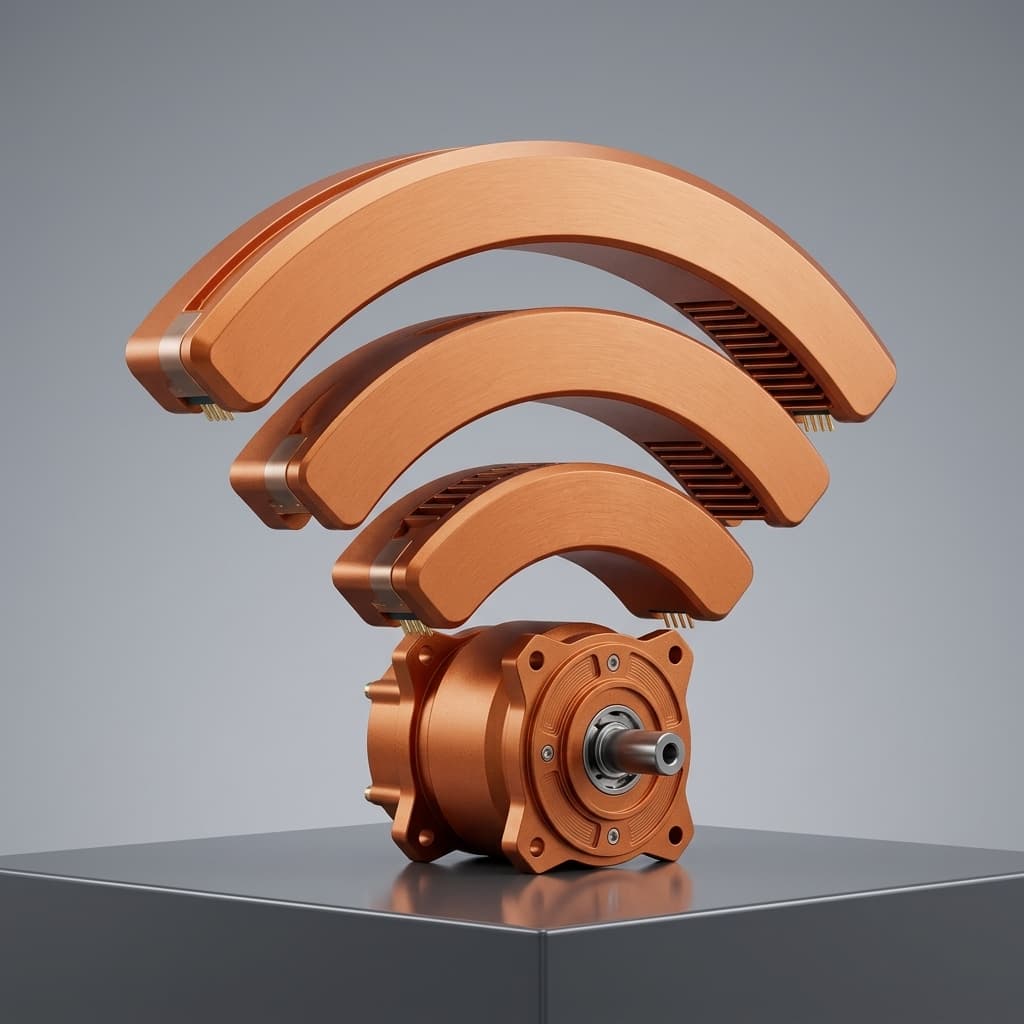 Modern QDD actuators for humanoid legs require tight integration of the motor, low-ratio planetary gear, dual encoders, and driver electronics. Finding a supplier who can deliver all these seamlessly is critical.
1. The Engineering Consensus: Why QDD for Humanoids?
Humanoid robots face unique locomotion challenges that separate them entirely from traditional fixed industrial automation. Unlike robotic arms mounted securely to factory floors, bipedal robots must carry their own power supply, balance dynamically, absorb extreme impact forces during foot strikes, and require compliant control to interact safely with human environments.
Traditional high-ratio BLDC setups (e.g., motors paired with 100:1 harmonic drives or cycloidal gearboxes) are incredibly stiff. While this stiffness is highly desirable for precision milling or heavy payload manipulation, it is detrimental to legged robotics. A robot taking a step will experience shock loads that travel straight up the leg structure; a high-ratio gearbox cannot easily "backdrive" or yield to this force, resulting in stripped gears or catastrophic mechanical failure.
To solve this, modern humanoid design employs Quasi-Direct Drive (QDD). A QDD actuator typically features a very large diameter, thin-gap frameless motor coupled with a low-ratio planetary gearset, generally ranging from 6:1 to 10:1 gear ratio. This low ratio yields several critical advantages:
- High Backdrivability (Mechanical Transparency): Because the gear ratio is low, external impacts can easily rotate the output shaft and backdrive the motor rotor. The system acts as a mechanical spring and damper, protecting the gearbox from stripping.
- Current-Based Torque Estimation: In highly geared systems, friction masks the torque output. With a QDD system, friction is so low that the torque applied to the environment is highly proportional to the electrical current consumed by the motor. This allows engineers to estimate force accurately using Field-Oriented Control (FOC) algorithms, often eliminating the need for fragile and expensive multi-axis torque sensors at the joints.
- Low Reflected Inertia: Reflected inertia scales with the square of the gear ratio. A 100:1 gearbox increases the motor's perceived inertia 10,000 times! A 10:1 ratio increases it only 100 times. This allows the robotic leg to swing rapidly forward and backward, enabling highly dynamic behaviors like running, jumping, and recovering from stumbles.
2. Reading the Datasheet: Hidden Specs You Must Verify
Most supplier datasheets highlight peak torque, continuous torque, and overall weight. However, these top-line metrics do not guarantee acceptable humanoid performance. Procurement teams and lead systems engineers must interrogate the following hidden specifications to avoid costly prototyping mistakes.
| Critical Specification | What to Look For | Why It Matters for Humanoids |
|---|---|---|
| Reflected Inertia (Jr) | Must be minimized. Calculated as Motor Rotor Inertia × (Gear Ratio)². | High inertia prevents fast leg swing and degrades force transparency, making compliant walking difficult and increasing energy consumption during gait cycles. |
| Thermal Time Constant | Look for the time it takes the stator to reach maximum rated temperature under continuous load (e.g., in minutes or seconds). | Humanoids often hold static poses (e.g., crouching or carrying a load) which rapidly overheats actuators because the motor generates heat but does not spin enough to induce air cooling. Short thermal limits cause unexpected robot shutdown. |
| Cogging Torque / Torque Ripple | Should be strictly below 2% of rated continuous torque. | High cogging torque introduces "notchy" vibrations at very low speeds. This degrades smooth walking trajectories and ruins the accuracy of current-based force control, making the robot jerky. |
| Static Friction (Stiction) | Maximum breakout friction of the integrated gearbox, bearings, and environmental seals combined. | High stiction ruins backdrivability. The robot will feel mechanically "stiff," fail to naturally absorb foot impacts, and require higher startup currents, wasting battery life. |
| Encoder Architecture | Look for Absolute Dual Encoders (Output shaft + Motor rotor side) above 17-bit resolution. | Essential for FOC stability. Dual encoders allow the controller to calculate the exact twist (deflection) of the gearset under load. Absolute encoders mean the robot knows its pose immediately upon startup without a calibration "dance." |
| Km (Motor Constant) | Look for Nm per sqrt(W). High values indicate efficient torque generation with low heat. | This metric defines how efficiently the motor converts power into torque. A higher Km means less I2R resistive heating for the same holding torque, critical for battery-powered bipedal robots. |
Deep Dive: The Dual Encoder Requirement
When evaluating an actuator, check if the supplier integrates dual absolute encoders. The primary encoder sits on the high-speed motor rotor and feeds the FOC loop to maintain electrical commutation. The secondary encoder sits on the output shaft after the planetary gear. Because even high-quality planetary gears have slight backlash and torsional compliance (twist) under heavy load, the difference between the high-speed encoder (divided by gear ratio) and the output encoder tells the robot exactly how much the joint has deflected. This data is the foundation of advanced impedance control and virtual spring behaviors in humanoids.
3. Application Boundaries and Engineering Trade-offs
QDD motors are not a universal, one-size-fits-all solution for every joint in a humanoid robot. They are highly optimized for specific physical demands. Understanding their operational boundaries is crucial to avoid costly over-engineering and bloated system weight.
Optimal Scenarios: The Lower Body
QDD motors shine in hips, knees, and ankles. These joints handle the entire weight of the robot during walking, requiring rapid torque reversals to swing the leg forward, followed immediately by impact absorption as the foot strikes the ground. The ability of the QDD actuator to briefly backdrive when the heel hits the floor protects the mechanical structure and smooths out the walking gait.
Sub-optimal Scenarios: Precision Manipulation
Wrists, hands, fingers, or precision tooling arms require a different approach. QDD motors are inherently bulkier in diameter than micro-BLDC motors. If the robot needs to thread a needle, insert a small electronic connector, or perform sub-millimeter precision tasks, the very low gear ratio of a QDD setup lacks the mechanical resolution and stiffness required. In these applications, traditional BLDC motors paired with zero-backlash harmonic drives (ratios of 50:1 to 100:1) are still the gold standard.
4. QDD Motor Procurement & Supplier Vetting Checklist
For procurement teams transitioning a humanoid robot from an R&D prototype to mass production (NPI), validating the supplier's manufacturing capabilities is as critical as validating the motor's performance. The actuator market is fragmented, with many suppliers over-promising and under-delivering on consistency.
Use this extensive checklist during your Request for Quotation (RFQ) and supplier auditing process, then tie the evidence to a documented quality and traceability plan:
Mechanical & Thermal Assessment
- Thermal Validation Reports: Does the supplier provide continuous torque data at elevated ambient temperatures (e.g., 40°C), or just at room temperature? Insist on seeing the thermal derating curves.
- Gearbox Material and Heat Treatment: Are the sun and planetary gears hardened to withstand repetitive shock loads without premature spalling? Request metallurgical specifications.
- Acoustic Noise & NVH: Are there rigorous NVH (Noise, Vibration, and Harshness) test reports? High acoustic noise indicates poor gear meshing or bearing misalignment, predicting early failure.
- Sealing and IP Rating: If the robot will operate outdoors, is the actuator genuinely IP54, IP65, or IP67 rated? Check if the stiction introduced by the seals was factored into the backdrivability metrics.
Electrical & Integration Capabilities
- Customization Capability: Can the supplier modify stator windings to adjust the Kv rating (RPM/V) for your specific battery bus voltage (e.g., 48V vs. 96V) without major tooling fees?
- Driver Integration: Is the Field-Oriented Control (FOC) driver integrated directly within the housing to save space and reduce EMI cabling?
- Communication Protocols: Does the integrated driver support real-time deterministic communication like EtherCAT, or high-speed CAN-FD? Avoid standard CAN bus for complex humanoids due to bandwidth limitations.
- Current Sensing Precision: Since torque estimation relies on current, are the phase current sensors high-resolution and low-noise?
Supply Chain & Scalability
- Magnetic Material Sourcing: Are critical magnetic materials (high-temperature grade Neodymium NdFeB magnets) sourced reliably? Do they have a secure supply chain less susceptible to geopolitical shocks?
- Volume Lead Times: What is the standard lead time for 100 units versus 1,000+ units?
- End-of-Line Testing: Does the supplier perform 100% end-of-line testing for torque ripple, backlash, and encoder calibration, or do they only test a statistical batch? Demand specific EOL test reports for every serial number shipped.
5. Frequently Asked Questions (FAQ)
Q: Can we just use a standard frameless motor and add our own planetary gearbox to create a custom QDD actuator? A: You can, and many advanced R&D labs do. However, integrating the bearing system, planetary gearset, dual encoders, heat sink, and driver into a compact, lightweight housing is mechanically and thermally complex. It requires sophisticated tolerance stack-up analysis. For accelerated time-to-market and lower technical risk, procuring pre-integrated QDD modules is heavily recommended for new players in the humanoid space.
Q: Why do QDD motors run hotter than traditional geared motors? A: Because of the low gear ratio (e.g., 8:1), the motor must produce significantly more native (un-geared) torque compared to a motor paired with a 100:1 gearbox to achieve the same final output torque. This requires higher continuous current in the stator coils. According to Joule heating laws, heat is generated proportionally to the square of the current (I2R). This makes thermal management the most critical failure point in QDD design.
Q: Do we still need 6-axis force-torque sensors on the joints if we use QDD motors? A: For many locomotive tasks like walking, balancing, and stair climbing, no. The low friction of the QDD actuator allows the software controller to estimate external forces purely by monitoring the electrical current. However, for the wrists or ankles where extremely precise Center of Pressure (CoP) or contact force measurements are needed, specialized force-torque sensors might still be utilized in conjunction with QDD estimation.
Q: How does the weight of a QDD compare to a Harmonic Drive setup? A: QDD actuators are generally heavier for the same peak torque. The low gear ratio forces the use of a physically larger motor to compensate. However, the elimination of heavy torque sensors, complex shock-absorbing mechanical springs (series elastic actuators), and the simpler structural design often results in a comparable or lighter total system weight for the leg.
Take the Next Step in Your Humanoid Project
Sourcing the right QDD motor dictates the ultimate agility, safety, battery life, and reliability of your humanoid platform. Don't let hidden thermal limits, high cogging torque, or unreliable supplier scaling derail your engineering NPI timelines. Choosing the right actuator partner early in the design phase is the most high-leverage decision a robotics team can make.
Ready to specify your actuators and review detailed 3D CAD files? Explore our range of high-performance, thermally-optimized QDD Actuators and Direct Drive Hubs.
For custom winding requirements, specific gear ratio modifications, or NPI volume scaling discussions, contact our engineering and procurement team today for a comprehensive technical consultation.
References & Sources
- Quasi-Direct Drive Actuation for a Lightweight Hip Exoskeleton with High Backdrivability and High Bandwidth
- Alternative Metrics to Select Motors for Quasi-Direct Drive Actuators
- Design and Characterization of 3D Printed, Open-Source Actuators for Legged Locomotion
- Cycloidal Quasi-Direct Drive Actuator Designs with Learning-based Torque Estimation for Legged Robotics
- Comparison between External and Internal Single Stage Planetary gearbox actuators for legged robots
Author

Categories
More Posts
QDD Motor vs BLDC Motor: Which is Best for Robot Joints?
A deep dive into the differences between Quasi-Direct Drive (QDD) actuators and traditional Brushless DC (BLDC) motors for robotics applications.
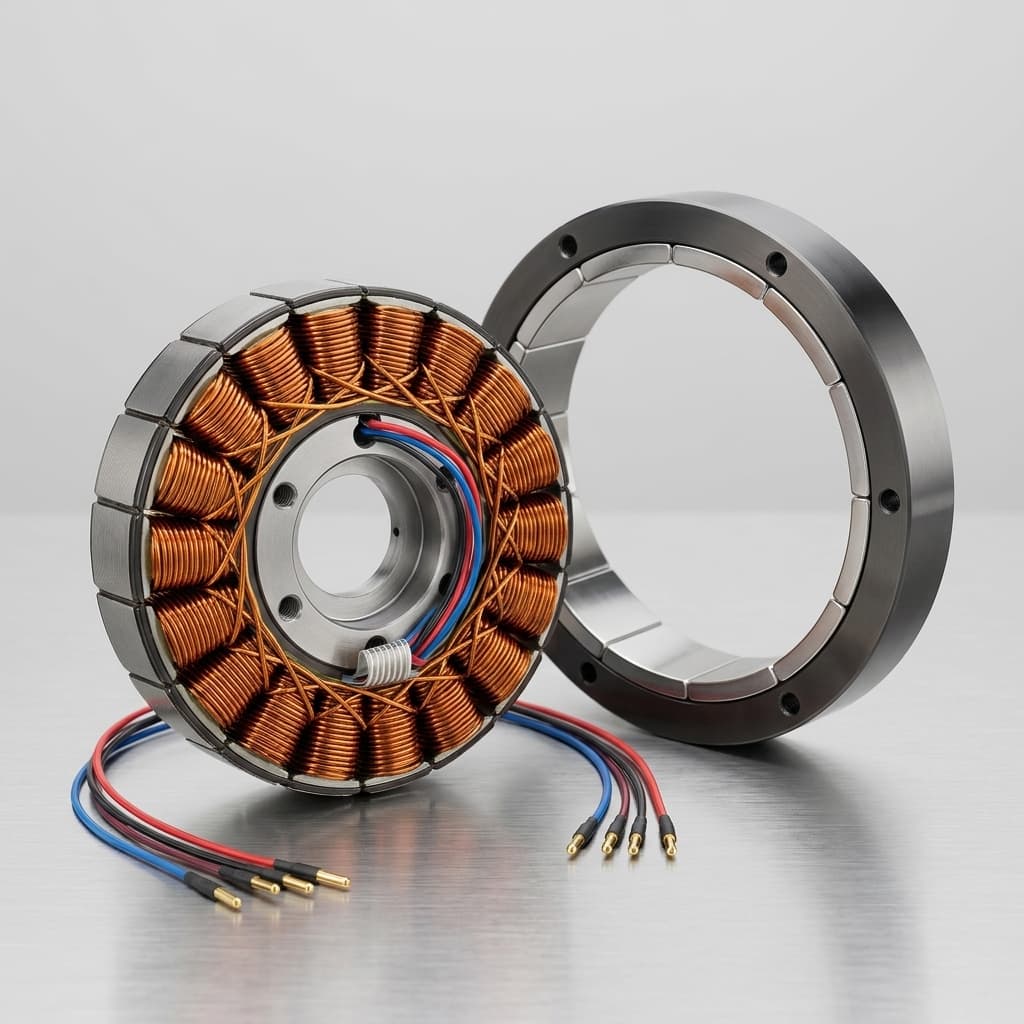
Frameless Torque Motors: The Ultimate Guide for CNC and Automation Integration
Learn how frameless torque motors (stator and rotor sets) are integrated into high-precision CNC machines, robotic joints, and custom automation equipment.
The Hidden Costs of Frameless Motor Integration: A TCO Model for Procurement
Use this frameless motor TCO model to compare kit price, housing, thermal design, QA, and lifecycle risk before issuing a robotics or OEM RFQ.