
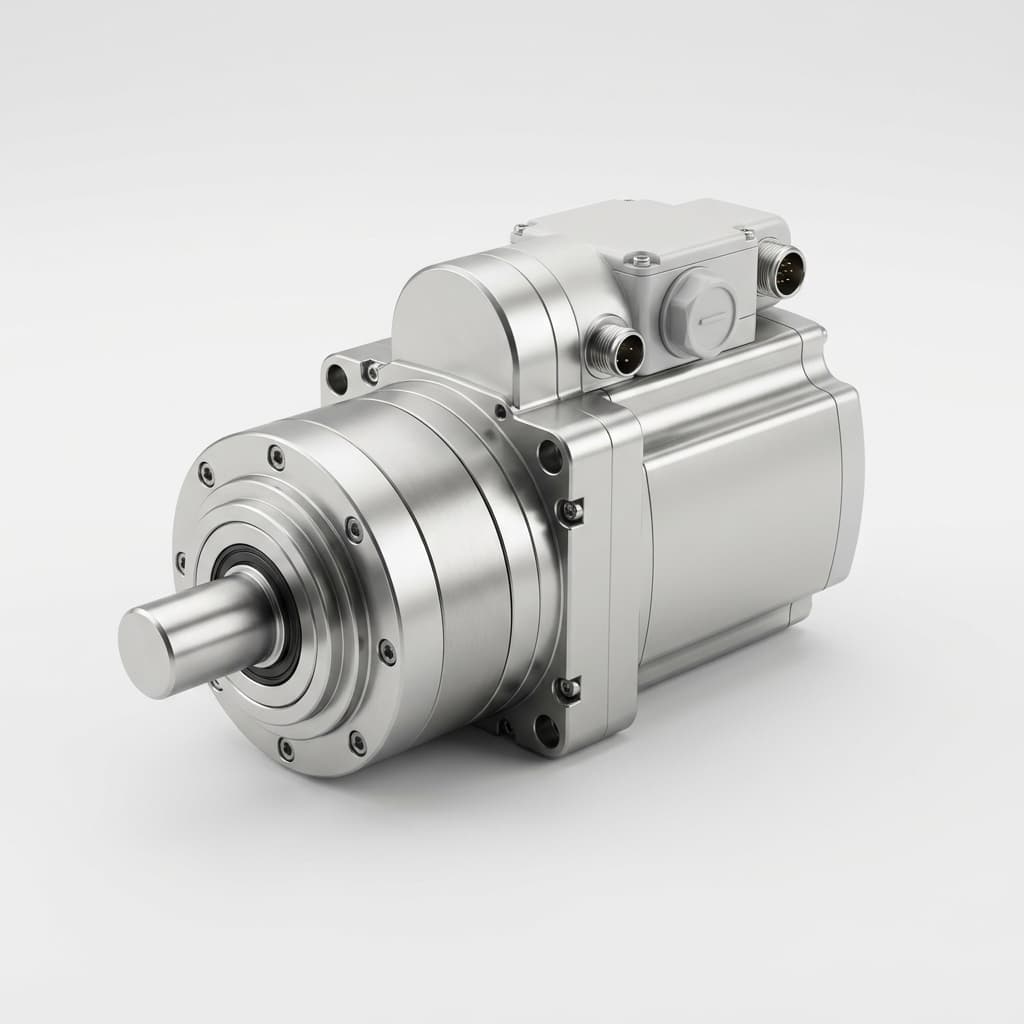
Selecting Frameless Torque Motors for Surgical Robotics: A Procurement and Engineering Guide
Specify frameless torque motors for surgical robotics with procurement checks for cogging torque, thermal limits, hollow bores, and QDD Motors support.
The surgical robotics industry is undergoing a structural shift. The demand for highly dextrous, sub-millimeter precision robotic arms has exposed the limitations of traditional brushed and housed brushless DC (BLDC) motors. For modern, minimally invasive surgical platforms, frameless torque motors paired with quasi-direct drive (QDD) topologies have become the de facto standard.
Unlike industrial manufacturing robots, where sheer speed and payload dominate, medical robotics prioritizes absolute smoothness, haptic transparency, and compact form factors. Designing an actuator joint that fits inside a sterile, sealed environment while delivering high holding torque—without overheating—presents a massive engineering challenge.
This guide provides engineering leads, mechanical designers, and procurement teams with a comprehensive framework for specifying frameless motors for surgical robotics.
Updated: June 24, 2026. Scope: global OEM sourcing programs for surgical arms, end-effectors, haptic master consoles, and sealed medical robot joints. This guide is not a regulatory submission checklist and does not replace IEC 60601, ISO 13485, or risk-management validation; use it to create the motor specification, supplier evidence request, and early DFM review package before formal verification.
Why Frameless Motors Dominate Surgical Joints
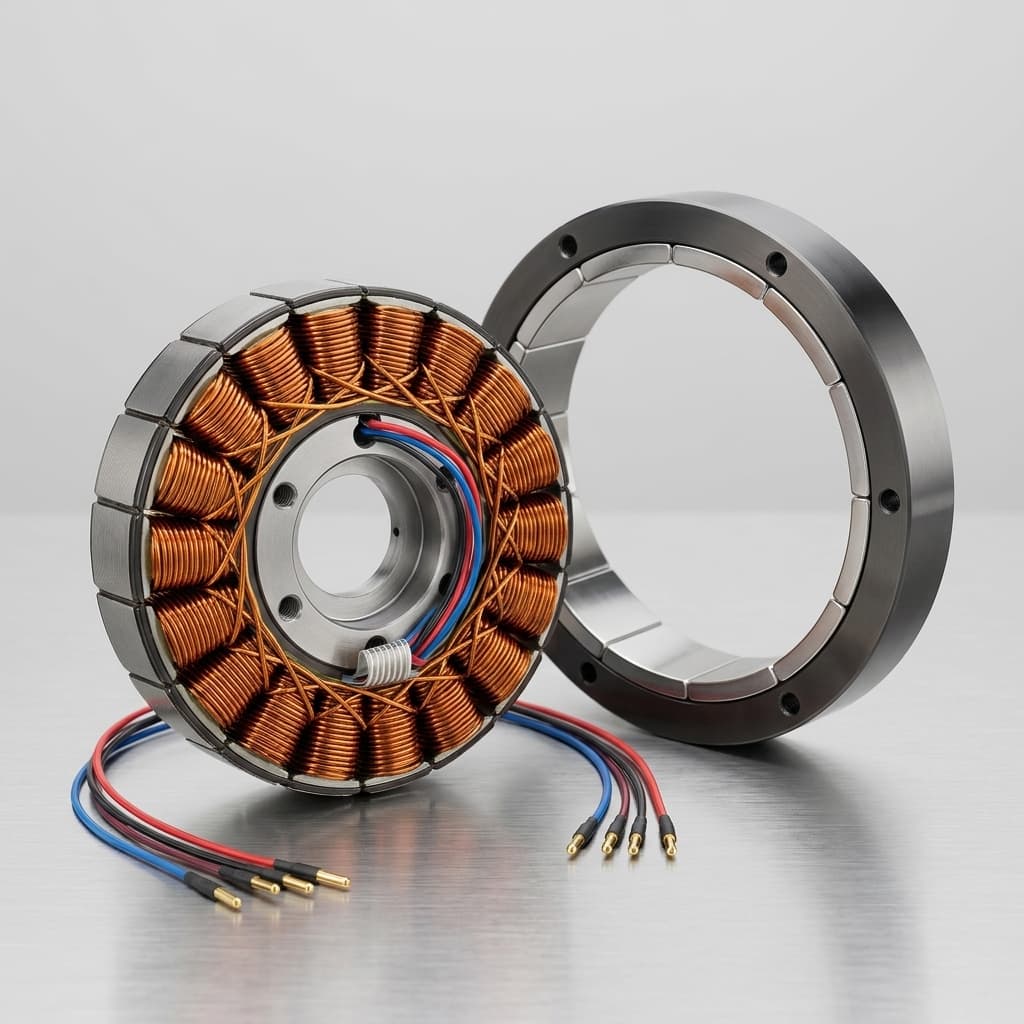
A frameless motor consists of a standalone rotor (with permanent magnets) and a stator (copper windings and laminations), completely devoid of a housing, shaft, or bearings.
By integrating these bare components directly into the robotic joint's mechanical structure, engineers achieve three critical advantages:
- Unmatched Power Density: The joint's structural aluminum itself acts as the motor housing, reducing redundant weight.
- Compact Integration: The axial length (pancake profile) is minimized.
- Hollow Bores for Cable Management: Critical for passing power, data (EtherCAT/CAN bus), and fluid lines safely through the rotational axis.
The Three Core Engineering Constraints
1. Zero Cogging Torque for Haptic Feedback
In robotic-assisted surgery, the surgeon operates from a console, relying on "haptic feedback" (force reflection) to "feel" tissue resistance. If the motor driving the robot arm has high cogging torque (the jerky, magnetic resistance felt when turning an unpowered motor), it introduces mechanical noise that masks the delicate force signals of the surgical instrument.
To solve this, procurement teams must spec motors designed with specialized winding techniques, skewed stators, or fractional slot configurations. A true surgical-grade frameless motor will have its cogging torque minimized to less than 1-2% of its continuous torque rating, allowing for perfectly smooth, backdrivable motion.
2. Thermal Management in Sealed Environments
Medical environments require stringent sterilization. Robotic arms are often draped, and their joints must be sealed to IP65 or IP67 standards to withstand harsh washdown chemicals.
Because the joint is completely sealed, there is zero forced-air cooling. The frameless motor must dissipate heat purely through conduction into the robot's outer chassis. Engineers must evaluate the Motor Constant (Km), measured in Nm/√W. This metric dictates how efficiently the motor translates electrical power into torque without generating waste heat (I²R losses). Motors with a high copper fill-factor deliver a superior Km, meaning they can hold heavy surgical instruments in a static position for hours without breaching the thermal limits of the sealed joint.
3. Axial Profile and Inner Diameter (ID)
A surgical robot arm may possess up to 7 degrees of freedom (DoF). Every millimeter of axial length added to a joint amplifies the moment arm, requiring exponentially more torque from the preceding joints.
Frameless motors allow for a "pancake" form factor (large Outer Diameter, short Axial Length). Crucially, the Large Inner Diameter (ID) accommodates a hollow shaft. In a 7-DoF arm, dozens of wires—EtherCAT data lines, power cables, absolute encoder feedback lines, and sometimes fiber optics—must travel from the base to the end-effector. Routing these through the center axis of the hollow frameless motor prevents external wire fatigue and eliminates the risk of cables pinching in the sterile field.
Comparing Motor Topologies for Surgical Arms
The following table breaks down the performance characteristics of various motor topologies when evaluated for medical robotics.
| Parameter | Brushed DC | Housed BLDC | Frameless Torque Motor | QDD Frameless Module |
|---|---|---|---|---|
| Form Factor | Cylindrical / Long | Cylindrical / Medium | Pancake / Ultra-thin | Pancake / Integrated |
| Cogging Torque | Zero (no iron core) | Medium to High | Ultra-Low (Optimized) | Ultra-Low |
| Hollow Shaft Capability | Rarely | Limited | Yes (Large Bore) | Yes (Large Bore) |
| Integration Complexity | Low | Low | High (Requires Precision) | Medium (Pre-aligned) |
| Thermal Dissipation | Poor | Good | Excellent (Direct Conduction) | Excellent |
| Sterilization Sealing | Very Difficult | Moderate | Exceptional (Inside Structure) | Exceptional |
| Maintenance Lifespan | Low (Brush Wear) | High | Very High (No Bearings) | Very High |
| Best Application | Legacy tools | Base joints, Pumps | Precision articulating arms | End-effectors, Haptics |
(Note: Data represents general industry baselines. Specific performance varies based on exact electromagnetic design and payload).
Sourcing and Procurement Checklist
For supply chain managers and lead engineers evaluating OEM frameless motor suppliers, the specification sheet is only the beginning. Use this checklist during your vendor evaluation:
- Cogging Torque Verification: Does the supplier provide a dedicated measurement report for cogging torque, not just theoretical models?
- Copper Fill Factor: Is the stator wound using traditional needle winding, or does it utilize segmented stators/orthocyclic winding for >60% fill factor?
- Thermal Class Compliance: Are the magnet wire, resins, and insulation rated for Class F (155°C) or Class H (180°C) to withstand localized hotspots during static holding?
- Tolerance Stack-up: Does the vendor provide comprehensive GD&T data (Geometric Dimensioning and Tolerancing) to guarantee the air gap will remain consistent after you press-fit the stator into your housing?
- Magnet Retention: In high-speed scenarios, are the neodymium magnets secured by banding, or merely glued? (Gluing alone is a risk if the joint experiences sudden impact loads).
- Cleanroom Manufacturing: Is the motor manufactured in an ISO Class 7 or 8 cleanroom to prevent microscopic ferrous contamination that could disrupt the air gap?
Operational Boundaries: When NOT to use Frameless Motors
While frameless motors are superior for the articulated linkages of a surgical arm, they are not universally applicable:
- Mobile Bases (AMRs): If your surgical robot features an autonomous mobile base for navigating the hospital, standard housed BLDC or servo motors are more cost-effective for the drive wheels.
- Low-Precision Tooling: For simple on/off pump drives or disposable retractors, the high cost and complex integration of frameless stators are unwarranted. Stick to standard housed micro-motors.
Integrating Encoders with Frameless Joints
Because a frameless motor has no shaft, you cannot use a standard shaft-mounted encoder. You must use a large-bore, hollow-shaft ring encoder (optical or magnetic). In a surgical joint, dual-encoder setups are standard:
- High-Resolution Incremental Encoder: Placed directly on the motor rotor for stable, high-bandwidth commutation.
- Absolute Encoder: Placed after the gearing (e.g., a harmonic drive) on the output side. This ensures the controller knows the exact joint position at startup without needing a homing sequence—a critical safety feature if power drops mid-surgery.
Summary: Designing the Future of Surgery
Selecting a frameless torque motor is a delicate balance of maximizing torque, minimizing heat, and fitting the largest possible hollow bore into the tightest possible space. By partnering closely with a motor manufacturer early in the design phase, roboticists can eliminate redundant components, reduce the overall weight of the arm, and deliver the precise haptic transparency that modern surgeons demand.
Frequently Asked Questions (FAQ)
1. How is a frameless motor mounted into a robotic joint?
The stator is typically secured into the joint housing via press-fitting or thermally conductive structural adhesives. The rotor is clamped or glued to the rotating shaft assembly. Extreme precision is required to maintain the concentricity of the air gap between the stator and rotor.
2. Can frameless motors be autoclaved?
Standard frameless components cannot be autoclaved directly due to moisture and extreme heat degrading the lamination adhesives and magnets. Instead, the robotic joint housing itself is hermetically sealed to withstand sterilization, while the motor remains protected inside.
3. Why are Neodymium magnets used despite their temperature sensitivity?
Neodymium-Iron-Boron (NdFeB) magnets offer the highest magnetic flux density available, crucial for maximizing torque in a small space. High-grade NdFeB magnets (like UH or EH grades) are specified to push the demagnetization temperature threshold up to 180°C or 200°C, safely above normal operating limits.
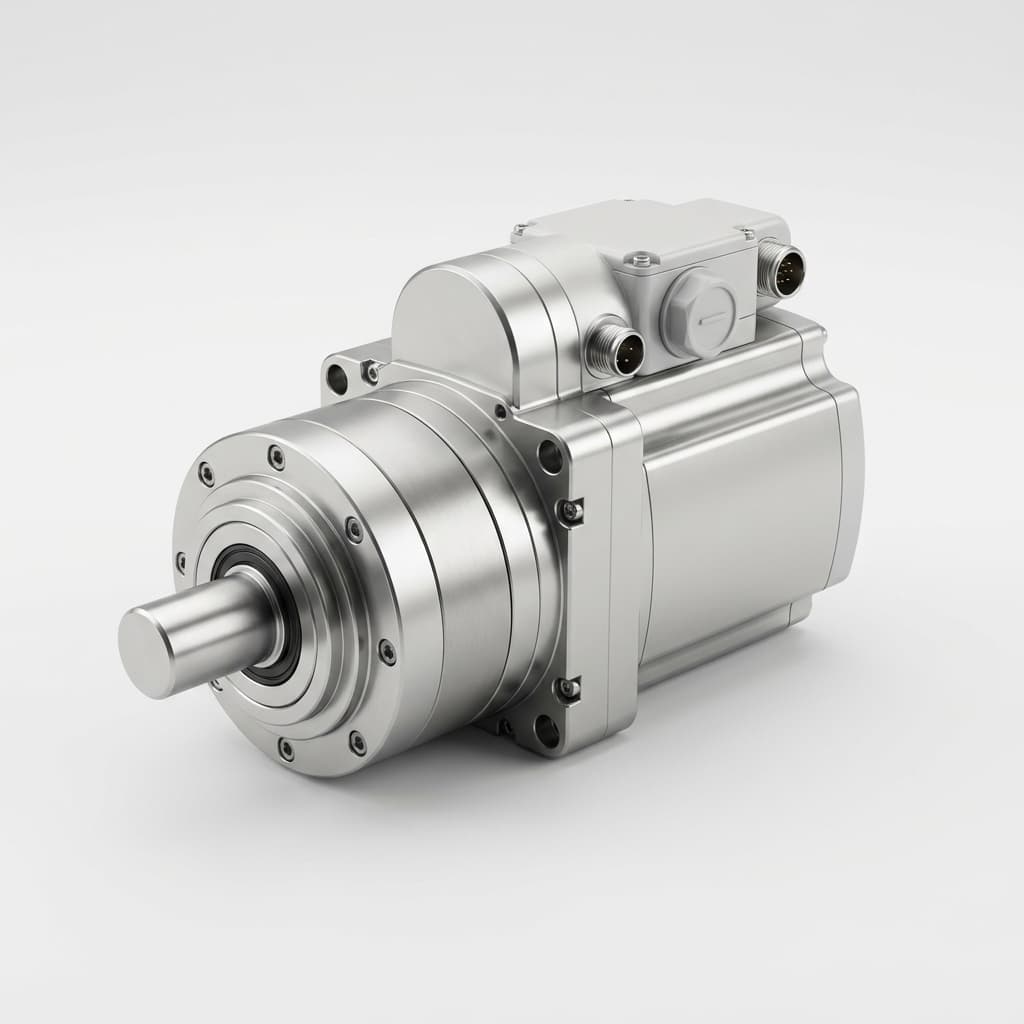
4. What is the difference between a Frameless Motor and a Quasi-Direct Drive (QDD) Actuator?
A frameless motor is just the raw electromagnetic components. A QDD actuator is an integrated assembly that takes a frameless motor and pairs it with a very low-ratio gearbox (typically less than 10:1 planetary) and sensors to create an easily integrated, backdrivable module.
5. Do I need a custom frameless motor for my surgical robot?
While off-the-shelf frameless sizes exist, surgical robots often require custom windings. An OEM can adjust the wire gauge and turn count to perfectly match the voltage and speed/torque curve required by your specific joint, without changing the mechanical footprint.
6. How does back-EMF affect high-speed robotic movements?
As the motor spins faster, it generates Back Electromotive Force (Back-EMF) that opposes the supply voltage, limiting the maximum speed. In surgical robotics, joint speeds are typically low, so Back-EMF is less of a limiting factor than static stall current (holding torque).
7. What is the impact of pole pair count on performance?
A higher pole pair count increases the torque constant and allows for a larger hollow bore, but it requires a higher electrical frequency from the controller to reach the same mechanical speed. Surgical motors often use high pole counts (e.g., 14, 21, or 42 poles) to maximize torque density.
Sources & References
- Surgical Robotic Technologies: Selecting Motors for Surgical Robot Joints
https://www.surgicalroboticstechnology.com/articles/selecting-motors-for-surgical-robot-joints - Portescap: Motors for Surgical Robotics - Compact Design, High Torque
https://www.portescap.com/en/industries-supported/motors-for-robotics/mini-motors-for-surgical-robotics - Medical Design Briefs: Designing the Right Motor to Enhance Surgical Robot Precision
https://www.medicaldesignbriefs.com/component/content/article/50457-designing-the-right-motor-to-enhance-surgical-robot-precision - Maxon Group: Surgical Systems
https://www.maxongroup.com/en-us/market-solutions/medical-technology/surgical-systems
QDD Motors specializes in engineering high-performance, low-cogging frameless torque motors optimized for surgical robotics and haptic applications. If your engineering team is hitting thermal or space constraints with your current actuator design, contact our applications team for a structural review and winding optimization.
Author

Categories
More Posts

48V vs. 96V QDD Motors for Humanoid Robots: A System-Level Procurement Guide
Compare 48V vs 96V QDD Motors for humanoid robots with thermal, cable, safety, supply-chain, and RFQ checks for global OEM teams.
The Hidden Costs of Frameless Motor Integration: A TCO Model for Procurement
Use this frameless motor TCO model to compare kit price, housing, thermal design, QA, and lifecycle risk before issuing a robotics or OEM RFQ.
QDD Motor vs BLDC Motor: Which is Best for Robot Joints?
A deep dive into the differences between Quasi-Direct Drive (QDD) actuators and traditional Brushless DC (BLDC) motors for robotics applications.