How Exoskeleton Motors Are Revolutionizing Wearable Robotics
Explore the critical engineering requirements for exoskeleton actuators, including weight, profile, backdrivability, and thermal management.
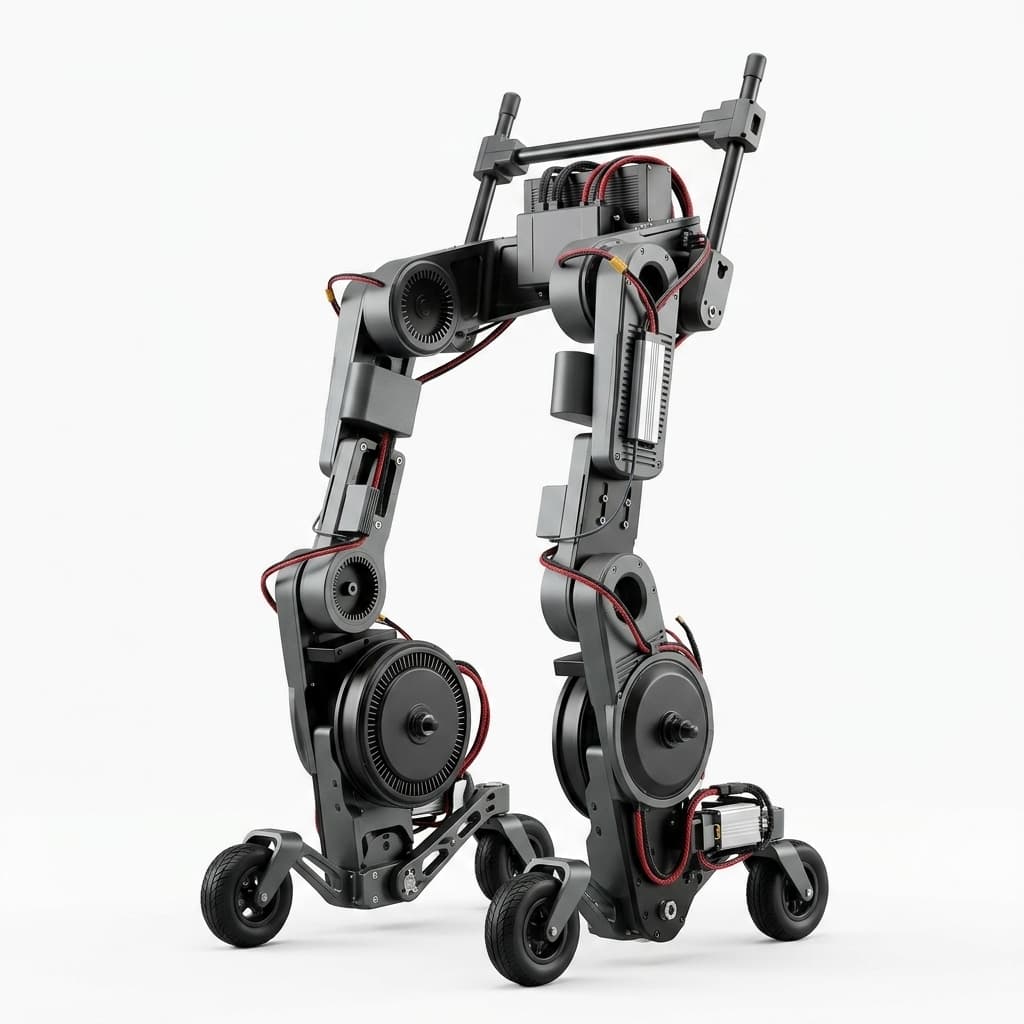
Wearable robotics depend entirely on their actuation systems. Without high-performance exoskeleton joint motors, rehabilitation suits and industrial worker augmentation systems cannot function.
Unlike industrial robotic arms that operate in controlled environments, exoskeletons must physically interact with the human body. This constraint dictates every aspect of the motor's design.
The 4 Key Engineering Challenges in Exoskeleton Motors
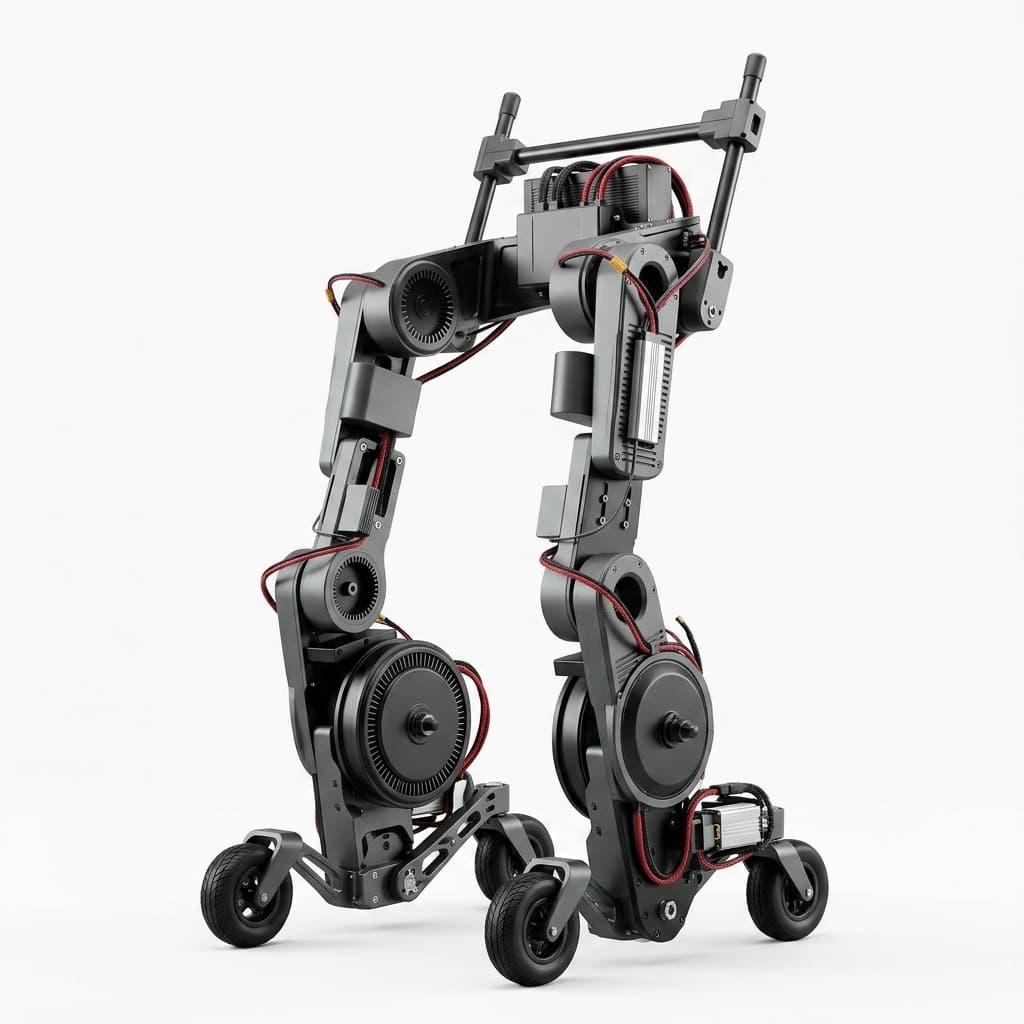
Exoskeleton motor design requires strict optimization. Engineers must solve four primary constraints:
1. The Weight-to-Torque Ratio (Power Density)
Every gram added to an exoskeleton increases the metabolic cost on the user. Therefore, the motor must deliver massive peak torque (often needed during stair climbing or lifting) while weighing as little as possible.
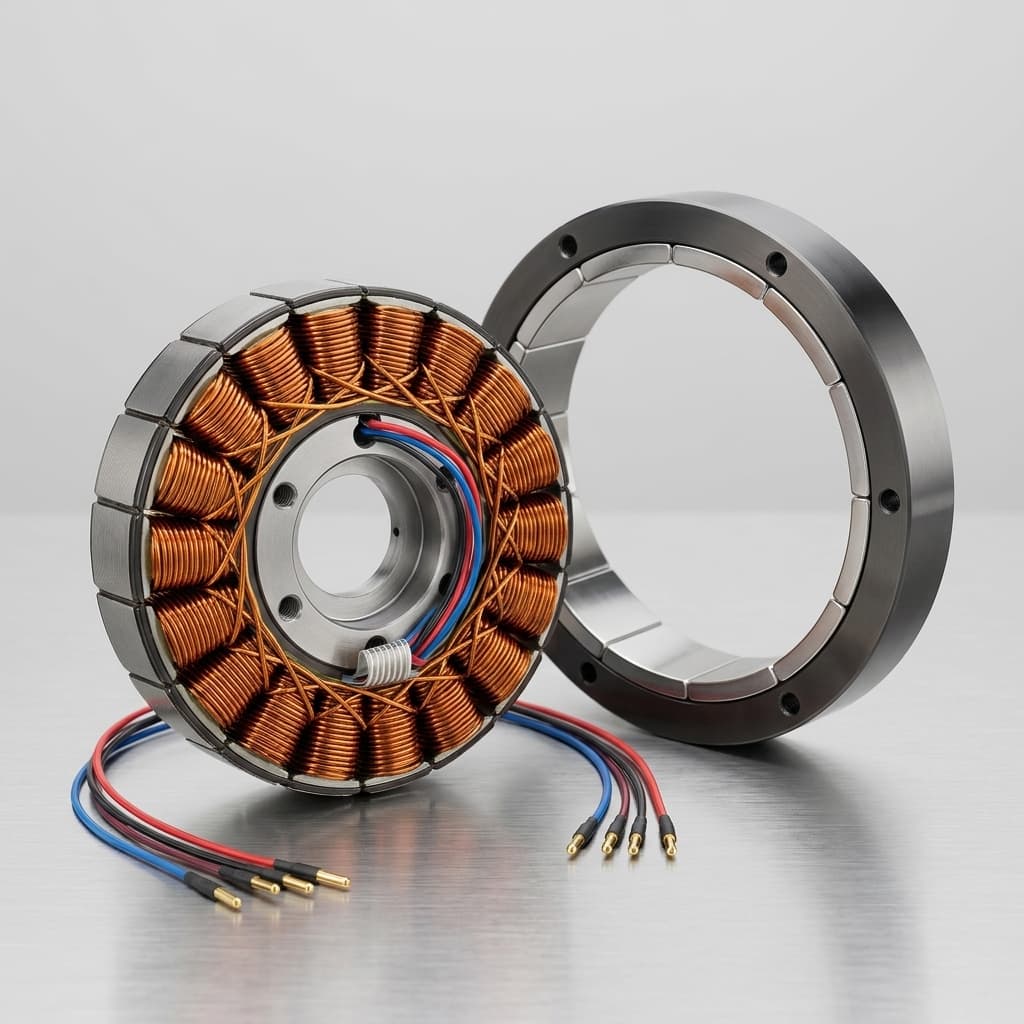
To achieve this, engineers utilize frameless torque motors with high fill-factor copper windings and premium Neodymium magnets. By integrating the motor directly into the joint housing, the weight and bulk of traditional motor casings are eliminated.
2. Axial Length and Form Factor
An exoskeleton joint must be extremely thin (pancake-shaped) to align closely with the human body's natural joints. If a motor protrudes too far laterally, it creates an awkward gait, increases the risk of bumping into obstacles, and applies uncomfortable moment loads to the user's limbs.
This necessitates large-diameter, low-profile stator and rotor designs, often featuring a hollow shaft. A hollow bore allows cables to be routed cleanly through the center of the joint, preventing snags and reducing the overall footprint.
3. Backdrivability and Safety
An exoskeleton must never fight the user. When the motor is unpowered or assisting a movement, the user must be able to move their limbs naturally without feeling significant resistance from the motor's gearbox.
This requires low-ratio gearboxes and low-cogging motor designs. Quasi-Direct Drive (QDD) actuators are becoming the standard here, as their low friction allows for excellent backdrivability. If power is lost, the user can still walk naturally without being "locked" in place.
4. Thermal Management Under Static Loads
Humans often stand still or hold heavy objects for extended periods. For an electric motor, holding a static load requires drawing continuous stall current, which generates immense heat. Because exoskeletons are worn close to the body, active liquid cooling is usually impossible, and cooling fans add unwanted bulk and noise.
Exoskeleton motors must be designed with exceptional thermal dissipation properties. The motor housing itself acts as a heatsink, and high-temperature-rated copper wire and insulation classes must be used to prevent burnout during sustained static holding.
The Motor Constant (Km): When evaluating motors for static holding, engineers look past peak torque and focus on the Motor Constant (Km). Measured in Nm/√W, Km defines how much torque the motor generates per watt of resistive heating (I²R loss). A higher Km means the motor can hold a payload for longer periods before overheating. QDD Motors optimizes magnetic flux and maximizes copper fill factor to achieve industry-leading Km values for exoskeleton applications.
Exoskeleton Actuator Sourcing Checklist for Engineers
If you are currently evaluating OEM partners for your exoskeleton motor program, ensure you ask the following questions:
- What is the peak torque capability vs. continuous stall torque?
- Is the stator customized for maximum slot fill factor (e.g., concentrated windings)?
- Can the hollow shaft internal diameter accommodate both power and EtherCAT/CAN lines?
- Does the supplier provide an integrated dual-encoder solution (one on the motor, one on the output)?
Trends in Wearable Actuation
New exoskeleton motor designs prioritize integrated sensory-motor modules. By packaging the frameless motor, planetary gearbox, absolute dual-encoders, and the motor controller into a single, ultra-thin module, OEM manufacturers can drastically reduce the complexity and wiring of the final exoskeleton suit.
(For more on how to mount and use frameless stators, see our Frameless Torque Motor Integration Guide.)
Engineering FAQ
Q: Can you use liquid cooling for exoskeleton motors? A: Rarely. Liquid cooling adds unacceptable weight and complexity to wearable systems. Exoskeleton motors rely purely on conductive cooling through the chassis and high thermal-class copper.
Q: Why is a hollow shaft necessary? A: It allows high-current power cables and data lines (like EtherCAT) to pass directly through the joint's axis of rotation, eliminating exterior cable loops that could snag during movement.
QDD Motors manufactures a dedicated line of Exoskeleton Motors designed to meet these exact requirements. Our ultra-thin, hollow-shaft, high-torque actuators currently power several advanced rehabilitation and industrial exoskeletons.
Are you developing a wearable robot? Reach out to our engineering team to discuss customized motor integration for your specific application.
Author

Categories
More Posts
48V vs. 96V QDD Motors for Humanoid Robots: A System-Level Procurement Guide
Compare 48V vs 96V QDD Motors for humanoid robots with thermal, cable, safety, supply-chain, and RFQ checks for global OEM teams.
The Hidden Costs of Frameless Motor Integration: A TCO Model for Procurement
Use this frameless motor TCO model to compare kit price, housing, thermal design, QA, and lifecycle risk before issuing a robotics or OEM RFQ.
Evaluating QDD Motors for Humanoid Robots: Procurement Criteria and Key Specs
Evaluate QDD Motors for humanoid robots with procurement specs, thermal checks, supplier vetting questions, and RFQ next steps for global OEM teams.